ARC Flash Services
The foundation of any electrical safety program is the identification of the hazards. It is the employers responsibility to comply with the law and complete an electrical safety assessment. These mandates can be found in the current OSHA regulations.
Protecting Your Workplace from Electrical Hazards
Are you unsure where to start with your electrical safety program? Do questions like “What do I have to do?” and “Who can help?” often come to mind? Applied Gray Matter is here to help you navigate the complexities of electrical safety and ensure that your workplace is fully protected.
The foundation of any effective electrical safety program begins with the identification of hazards. As an employer, it is your responsibility to comply with OSHA regulations and ensure that a thorough electrical safety assessment is conducted. Our team of experts at Applied Gray Matter specializes in performing these assessments, ensuring that your workplace meets and exceeds OSHA and NFPA 70e standards.
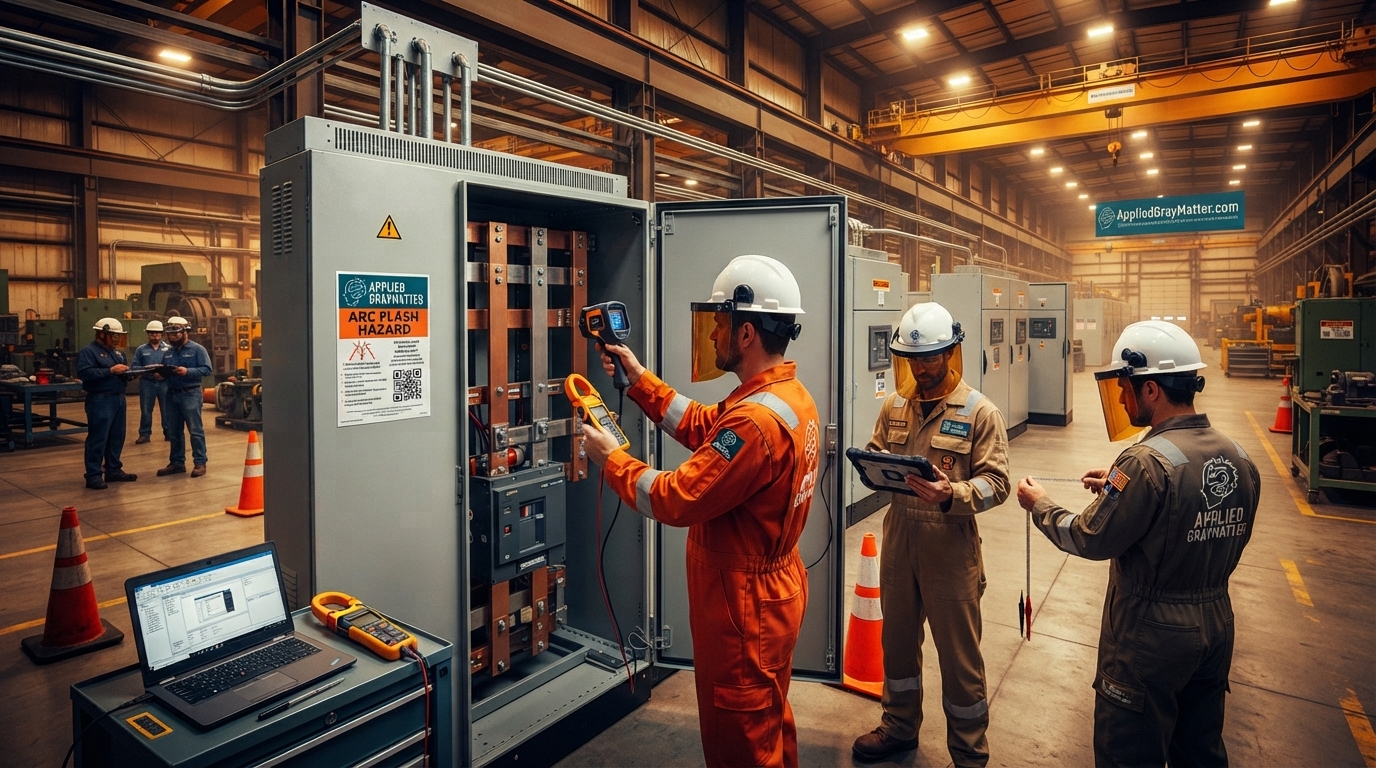
But our services don’t stop at assessment. We provide comprehensive training programs tailored to your specific needs, helping your employees recognize and mitigate the risks associated with ARC flash hazards. Additionally, we assist in the selection and implementation of Personal Protective Equipment (PPE), ensuring that your team is equipped with the best possible protection.
From policy creation and auditing to ongoing support, Applied Gray Matter has the expertise to help your company achieve and maintain full compliance. Protect your employees and safeguard your operations with our trusted ARC Flash Services.
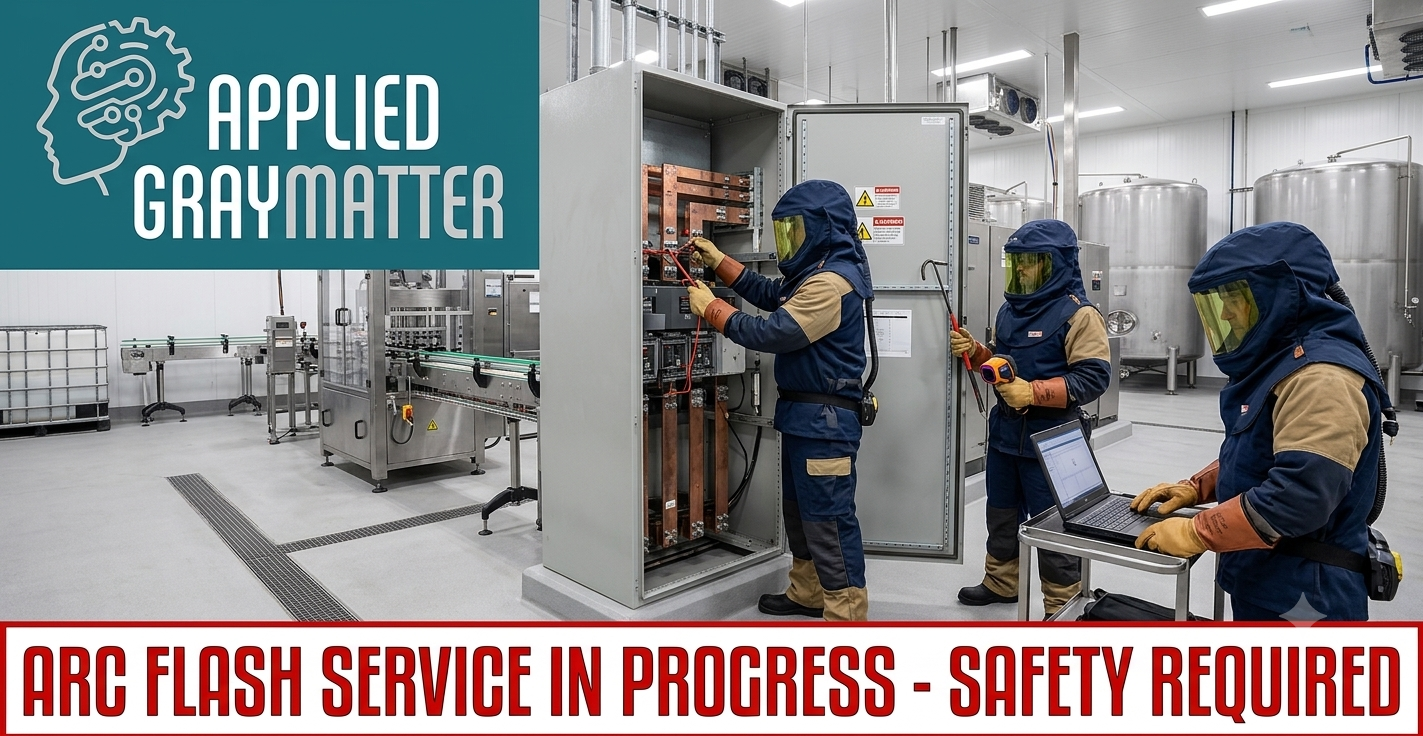
Arc flash services provide comprehensive electrical safety solutions, including detailed hazard assessments (studies), risk mitigation strategies, training, and compliance documentation (labels), to identify and reduce dangers from powerful electrical explosions, ensuring adherence to OSHA, NFPA 70E, and IEEE standards for worker protection and facility safety. These services involve onsite data collection, detailed engineering analysis (short circuit, coordination), and implementing solutions like better PPE, revised work practices, and system upgrades.

ARC Flash Services The foundation of any electrical safety program is the identification of the hazards. It is the employers responsibility to comply with the law and complete an electrical safety assessment. These mandates can be found in the current OSHA regulations.
Key Services Offered:
- Arc Flash Hazard Analysis/Risk Assessment: Onsite surveys to identify potential hazards, calculate incident energy, and define safe boundaries.
- Short Circuit & Coordination Studies: Verifying fault currents and protective device settings for system reliability and accurate hazard data.
- Labeling & Documentation: Producing compliant, clear labels for equipment detailing hazards, PPE, and boundaries.
- Mitigation Services: Design reviews, recommendations for de-energizing, insulation, or new technology to lower energy levels.
- Training & Program Development: Educating staff on electrical hazards, safety standards (NFPA 70E), and proper PPE use, plus help with Lockout/Tagout programs.
- Electrical Safety Audits: Mock OSHA inspections to find gaps in existing safety programs and documentation.
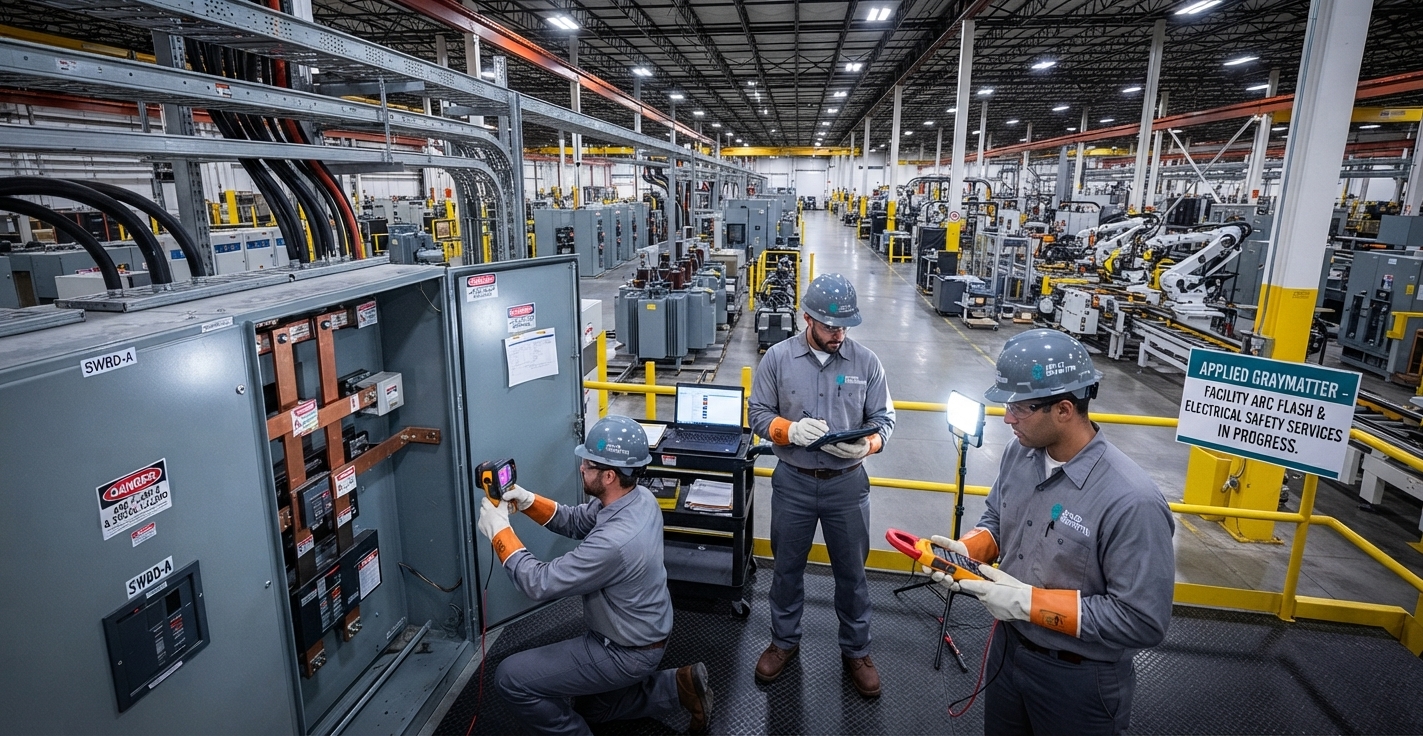
Why They’re Important:
- Compliance: Mandated by OSHA and codes like NFPA 70E for energized work.
- Worker Safety: Prevents severe burns, blindness, fatalities, and hearing loss.
- Risk Reduction: Identifies hidden risks and provides actionable solutions to prevent accidents.
- Regular Updates: Assessments are typically required every five years or after major electrical modifications
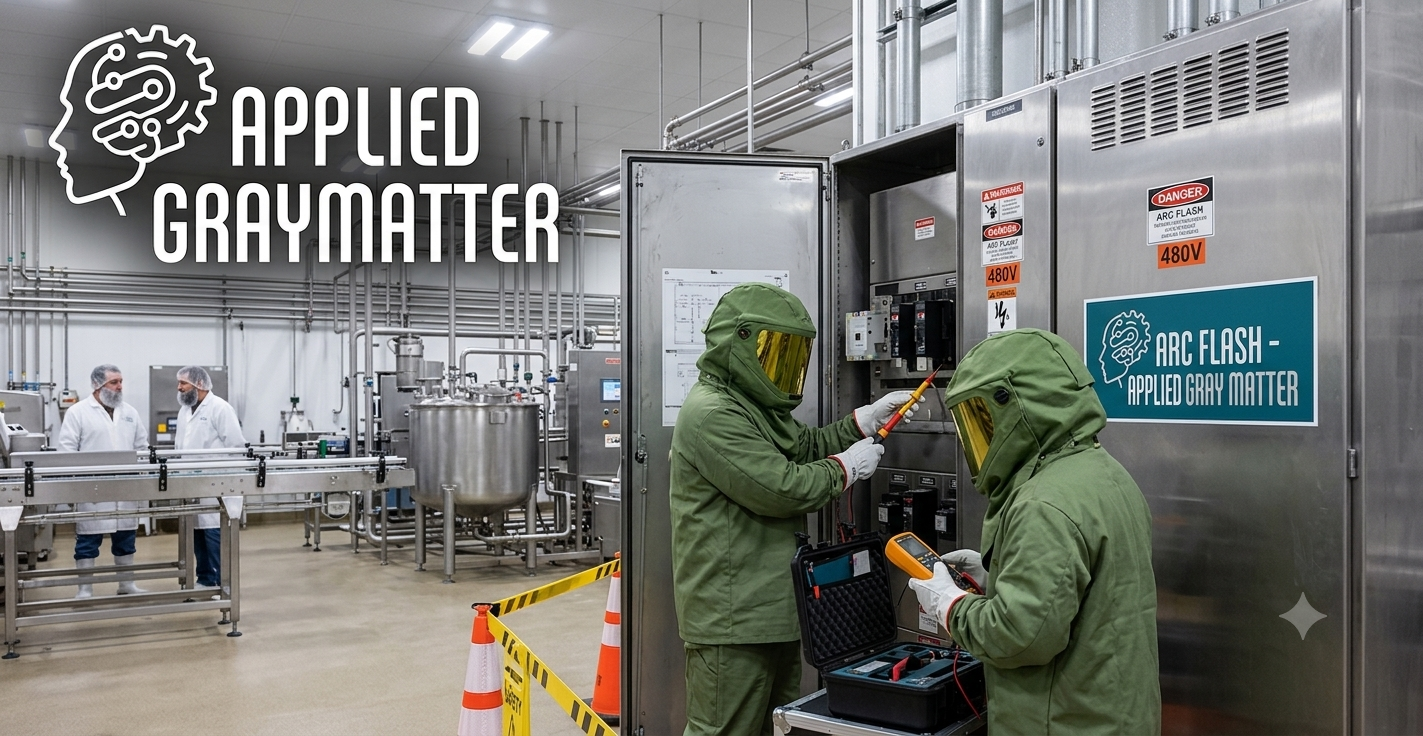
ARC Flash Services The foundation of any electrical safety program is the identification of the hazards. It is the employers responsibility to comply with the law and complete an electrical safety assessment. These mandates can be found in the current OSHA regulations.
Call Rock At (315) 878-2372 To Get A Complete ARC Flash Analysis of All Your Industrial Electrical Equipment