Strategic Engineering and Compliance Guidance from Applied Gray Matter, Your Custom Control Panel Manufacturer
Abstract: This white paper provides an authoritative overview of industrial control panel design,
safety, and compliance. It explores the critical nature of UL 508A certification, Short-Circuit Current
Rating (SCCR) methodologies, and the tangible value of partnering with an expert OEM control
panel shop. Furthermore, it outlines how industrial operations can leverage modern power resilience
architectures—such as the Battery Emergency Backup System (BEBS)—to bridge the gap between
advanced controls and uninterrupted productivity.
WHO THIS WHITE PAPER IS FOR
This document is written for OEMs, system integrators, plant engineers, operations leaders, and
specifiers who are responsible for designing, purchasing, or maintaining industrial control panels
and critical electrical infrastructure. It serves as a technical bridge between high-level project goals
and the strict compliance requirements of modern industrial environments.
KEY TAKEAWAYS
- UL 508A is the Foundation: A certified UL 508A control panel designer ensures panels meet
safety standards regarding component usage, environmental ratings, and motor protection.
- SCCR is Non-Negotiable: A panel’s Short-Circuit Current Rating must be adequate for the
available fault current at the line terminals. Miscalculations here lead to safety hazards and
rejected inspections.
- OEM Repeatability Requires Discipline: A true OEM control panel shop delivers consistent
documentation, verified SCCR calculations, and accurate labeling to eliminate commissioning
surprises.
- Power Resilience is Now Integrated: To support critical controls, advanced energy storage
solutions like the Applied Gray Matter BEBS provide industrial-grade, scalable backup power
that traditional UPS systems cannot match.

Executive Summary
In modern manufacturing, process control, and automation, the industrial control panel is the central nervous system of the operation. As production environments become more complex, the regulatory and safety standards governing these panels have become correspondingly stringent. Among these, UL 508A stands as the benchmark for safety and reliability in the United States and Canada.
This white paper details the strategic importance of utilizing a certified custom control panel manufacturer. We explore the specific requirements of UL 508A, the critical engineering mechanics behind Short-Circuit Current Rating (SCCR), and what OEMs should demand from their control panel shop to ensure seamless integration and inspection readiness. Finally, we detail how resilient electrical infrastructure—specifically Applied Gray Matter’s Battery Emergency Backup System (BEBS) & Large Scale Energy Storage Systems—complements engineered control panels to eliminate unplanned downtime.
TABLE OF CONTENTS
1. Why Industrial Control Panels Matter in Modern Operations
2. What UL 508A Is and Why It Matters
3. Deliverables of a Qualified Custom Control Panel Manufacturer and OEM Shop
4. SCCR Fundamentals: Safety, Compliance, and Project Success
5. The Role of the Control Panel Designer
6. Applied Gray Matter’s UL 508A Control Panel Service
7. Industrial Battery Backup and Large-Scale Energy Storage (BEBS)
8. Frequently Asked Questions (FAQ)
9. Conclusion
10. References and Source Notes
1. Why Industrial Control Panels Matter in Modern Operations
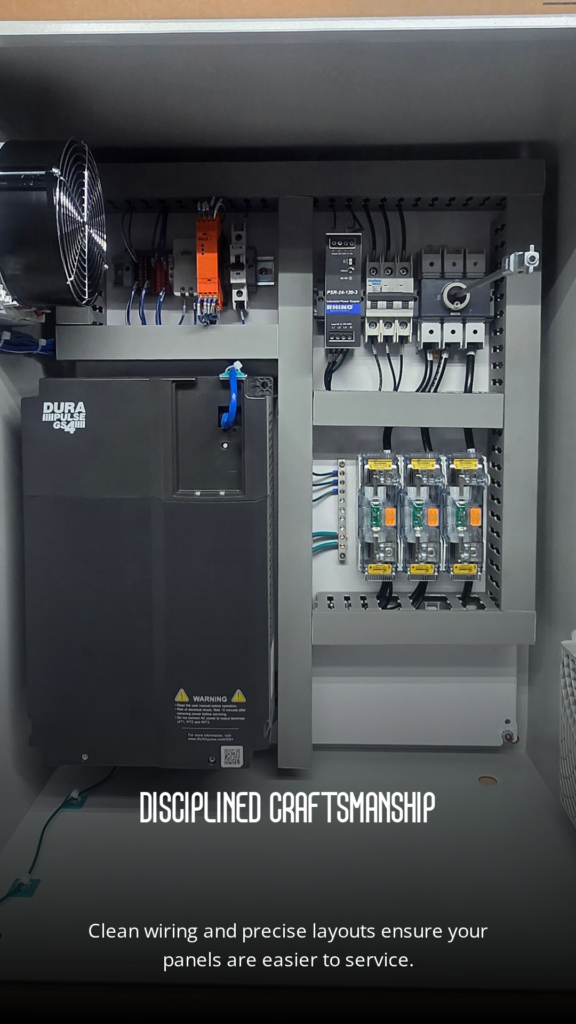
Industrial control panels form the critical link between raw electrical power and automated mechanical action. UL describes industrial control panels, per National Electrical Code (NEC) 409.2, as assemblies of two or more power circuit components, control circuit components, or a combination thereof. These enclosed assemblies house the contactors, relays, PLCs, variable frequency drives (VFDs), and protective devices required to operate industrial machinery.
In contemporary operations, a failure at the control panel level equates to a total process halt. As facilities lean heavily into automation, IIoT, and integrated SCADA systems, the control panel must not only execute logic flawlessly but also operate safely under immense electrical stress. Without rigorous engineering from a dedicated custom control panel manufacturer, these enclosures become liabilities, vulnerable to electrical faults, overheating, and sudden failures that compromise both personnel safety and operational uptime.
2. What UL 508A Is and Why It Matters
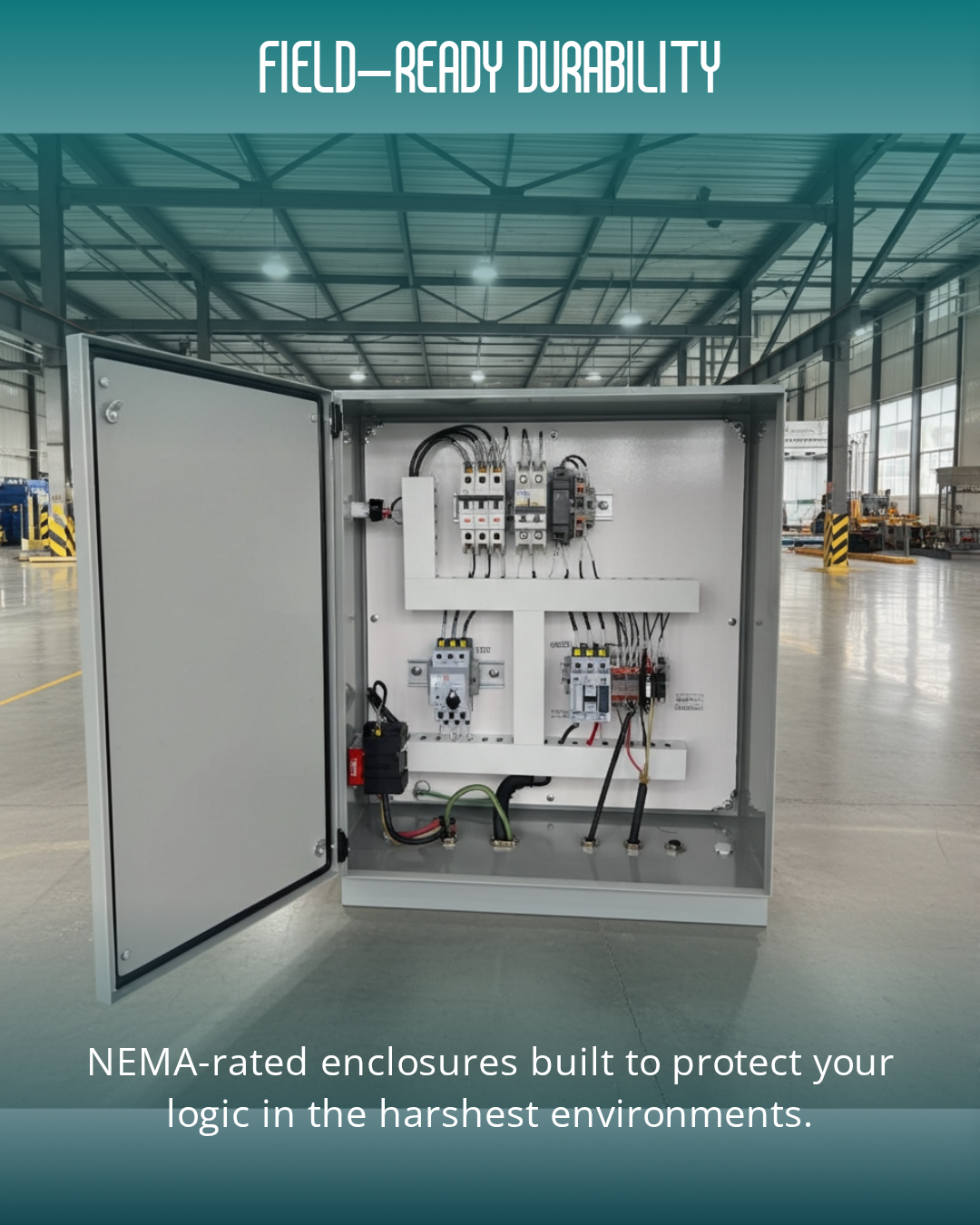
UL 508A is the definitive standard for the construction of industrial control panels. It addresses component usage, enclosure and environment ratings, wiring methods, motor protection, safety markings, and conformance to NEC and Canadian Electrical Code (CEC) expectations.
UL’s Industrial Control Panel Shop Program allows qualified panel manufacturers who custom-build or massproduce industrial control panels to apply the UL Mark at their factories for the U.S. and Canada. However, this isnot an arbitrary designation. To participate, the OEM control panel shop must undergo mandatory training and maintain qualified staff (Manufacturer Technical Representatives) who demonstrate an ongoing mastery of the standard.
For end-users and OEMs, sourcing a panel built to UL 508A standards ensures that the assembly uses UL-listed or UL-recognized components, sized correctly and protected appropriately. This minimizes the risk of red-tagged equipment at the job site, resulting in fewer delays and eliminating costly field rework.
3. Deliverables of a Qualified Custom Control Panel Manufacturer and OEM Shop
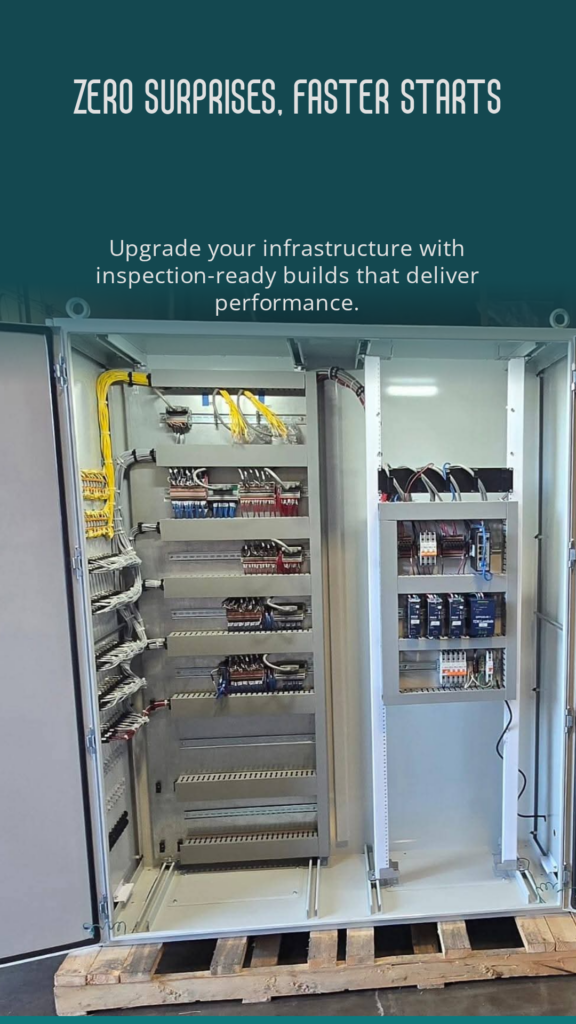
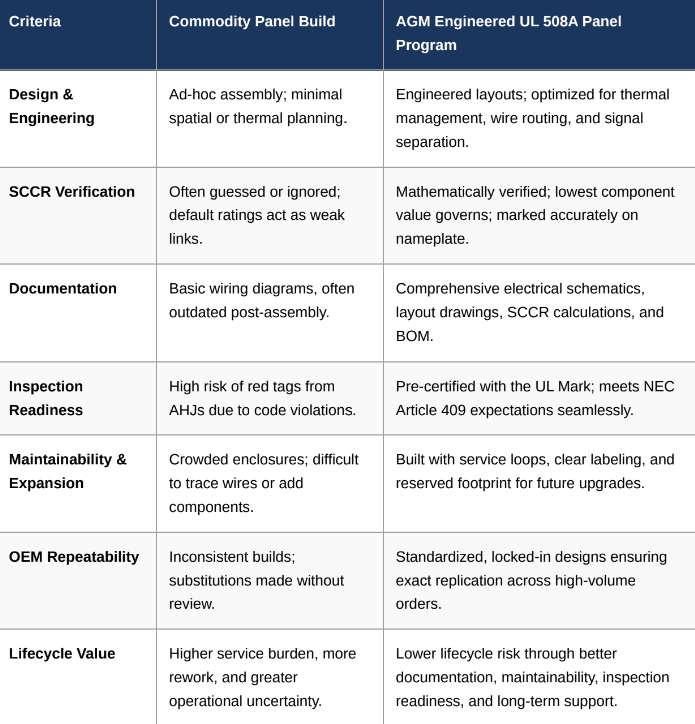
A true OEM control panel shop operates fundamentally differently from a commodity builder. While a commodity builder simply mounts components in a box, a qualified custom control panel manufacturer engineers a comprehensive, repeatable solution. A properly engineered panel reduces rework, inspection issues, and startup delays.
When evaluating a shop, industrial clients should expect the following deliverables as standard practice:
Complete Documentation: Electrical schematics, layout drawings, and precise bill of materials (BOM).
SCCR Calculations: Documented proof of the panel’s ability to withstand fault currents.
Proper Labeling: Accurate nameplates bearing the UL Mark, SCCR values, and environmental ratings.
Regulatory Alignment: Designs that comply not only with UL 508A but also anticipate NEC Article 409
installation requirements.
By delivering consistent, meticulously documented panels, an OEM control panel shop allows machine builders to scale their production confidently, knowing that every unit shipped meets the same rigorous safety and performance criteria.
4. SCCR Fundamentals: Safety, Compliance, and Project Success
Short-Circuit Current Rating (SCCR) is perhaps the most misunderstood yet critical element of industrial control panel design. SCCR represents the maximum fault current a panel can safely withstand without causing a fire or shock hazard. NEC Article 409 and related expectations are expressly intended to prevent the misapplication of control products, requiring appropriate SCCR marking on the equipment.
Compliance dictates that a panel’s SCCR must be adequate relative to the available fault current at the line
terminals or supply disconnecting means. According to Eaton, determining the practical UL 508A/SCCR approach involves assessing the individual SCCR of each component, accounting for current-limiting components where applicable, and noting that the lowest applicable value governs the entire panel’s SCCR.
A control panel designer must navigate several nuances regarding SCCR:
- Terminal Blocks: Per UL 508A Table SB4.1, terminal blocks have a default SCCR of only 10 kA unless
established otherwise. This often becomes the “weak link” in a panel’s rating.
- Control vs. Power Circuits: UL notes that panels containing only control circuits may not require an SCCR. However, any panel with at least one power circuit absolutely requires an SCCR.
- Multi-Panel Machinery: For machinery featuring multiple panels, each control panel needs its own distinct SCCR and nameplate to properly determine the overall machine SCCR.
Failing to accurately calculate and mark the SCCR inevitably leads to rejected inspections, safety hazards, and the costly necessity of retrofitting current-limiting solutions in the field.
5. The Role of the Control Panel Designer
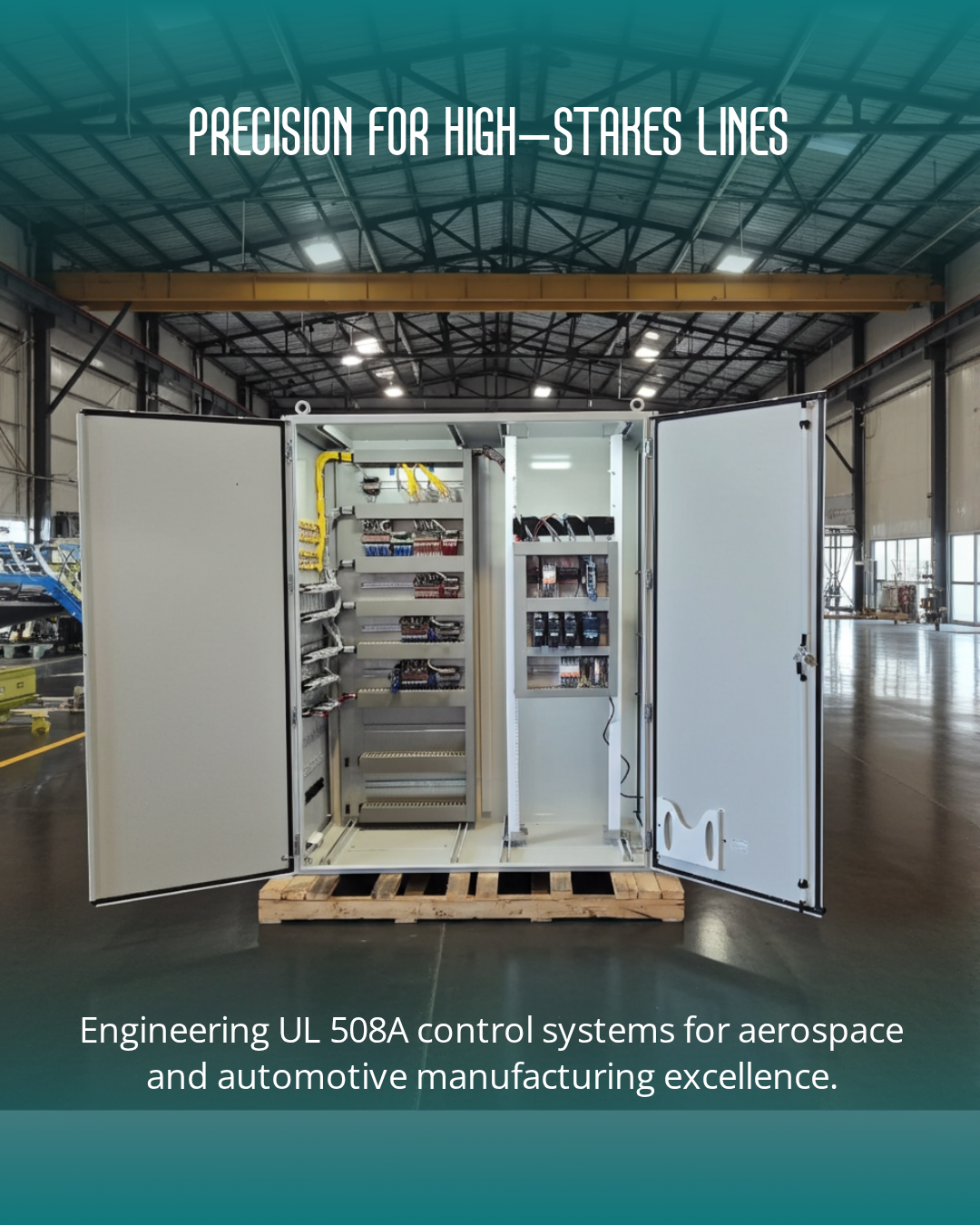
The control panel designer plays a pivotal role in translating process requirements into a physical, compliant reality. Beyond selecting components, the designer is responsible for the spatial and thermal engineering of the enclosure. This includes ensuring adequate wire bending space, maintaining proper separation between high-voltage power circuits and sensitive low-voltage control signals, and calculating heat dissipation to ensure longevity of components like VFDs and power supplies.
A forward-thinking designer also engineers for maintainability and expansion. By providing neatly routed
wireways, clear terminal designations, and leaving physical space for future I/O or power modules, the designer ensures that the industrial control panels can evolve alongside the facility’s needs. The combination of structural layout and comprehensive documentation—schematics and layout drawings—empowers field technicians to troubleshoot safely and efficiently.
6. Applied Gray Matter’s UL 508A Control Panel Service
Applied Gray Matter (AGM) operates as a premier UL 508A certified control panel fabrication shop, offering
comprehensive cabinet certification. AGM designs and fabricates UL 508A certified industrial control panels that strictly comply with UL’s Industrial Control Panel Shop Program and current NEC expectations for safe, codecompliant installations.
As a leading custom control panel manufacturer, AGM emphasizes rigorous panel documentation, including
electrical schematics, layout drawings, exact SCCR calculations, and accurate labeling. AGM exclusively uses ULlisted or UL-recognized components, correctly sized conductors, and properly rated overcurrent protection,ensuring that a verified SCCR is clearly marked on the nameplate.
AGM positions itself as a single source for design, fabrication, testing, documentation, and long-term support. Whether an OEM requires high-volume repeatable engineering or a plant engineer needs complex retrofits and upgrades for existing systems, AGM’s custom control panel design and engineering services provide an uncompromised path to safety and operational reliability.
Comparison: Commodity Panel Build vs. Engineered UL 508A Panel Program
7. Industrial Battery Backup and Large-Scale Energy Storage (BEBS)
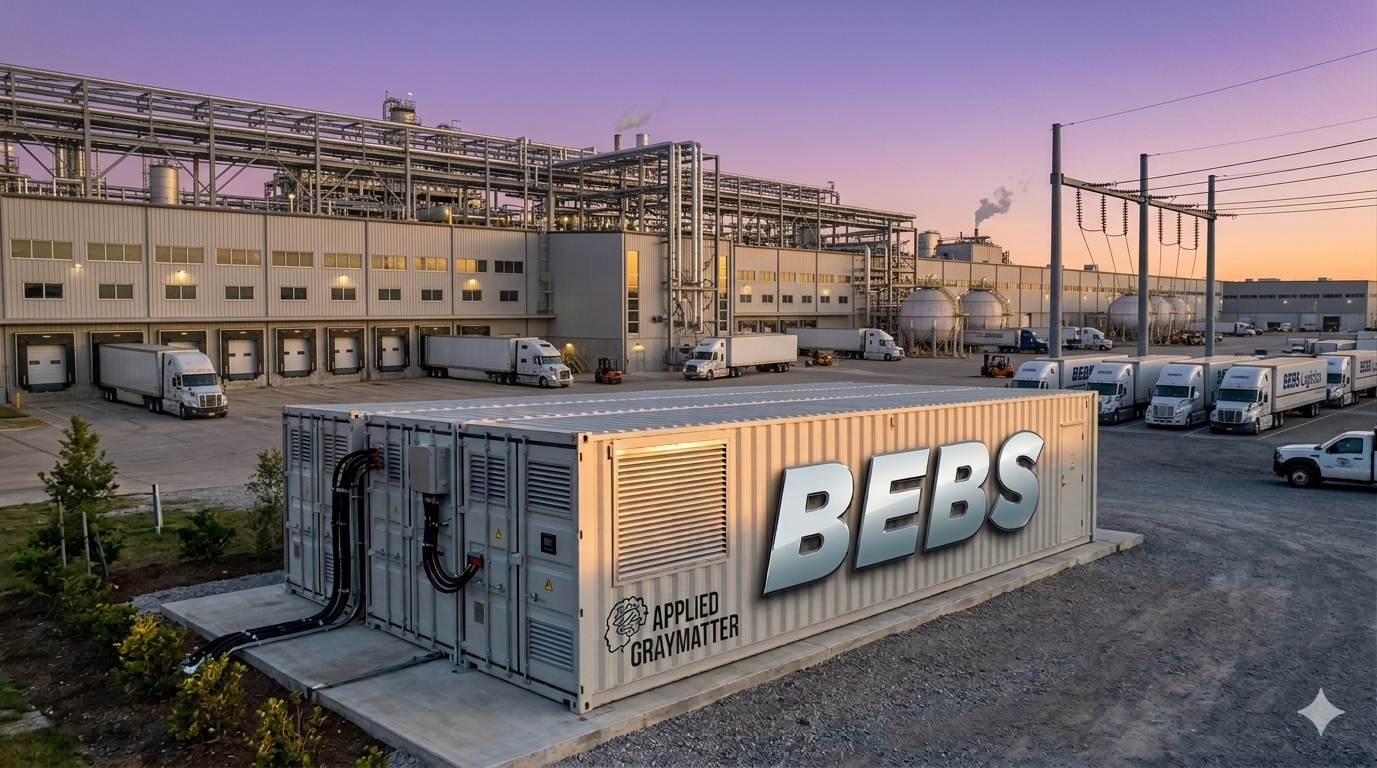
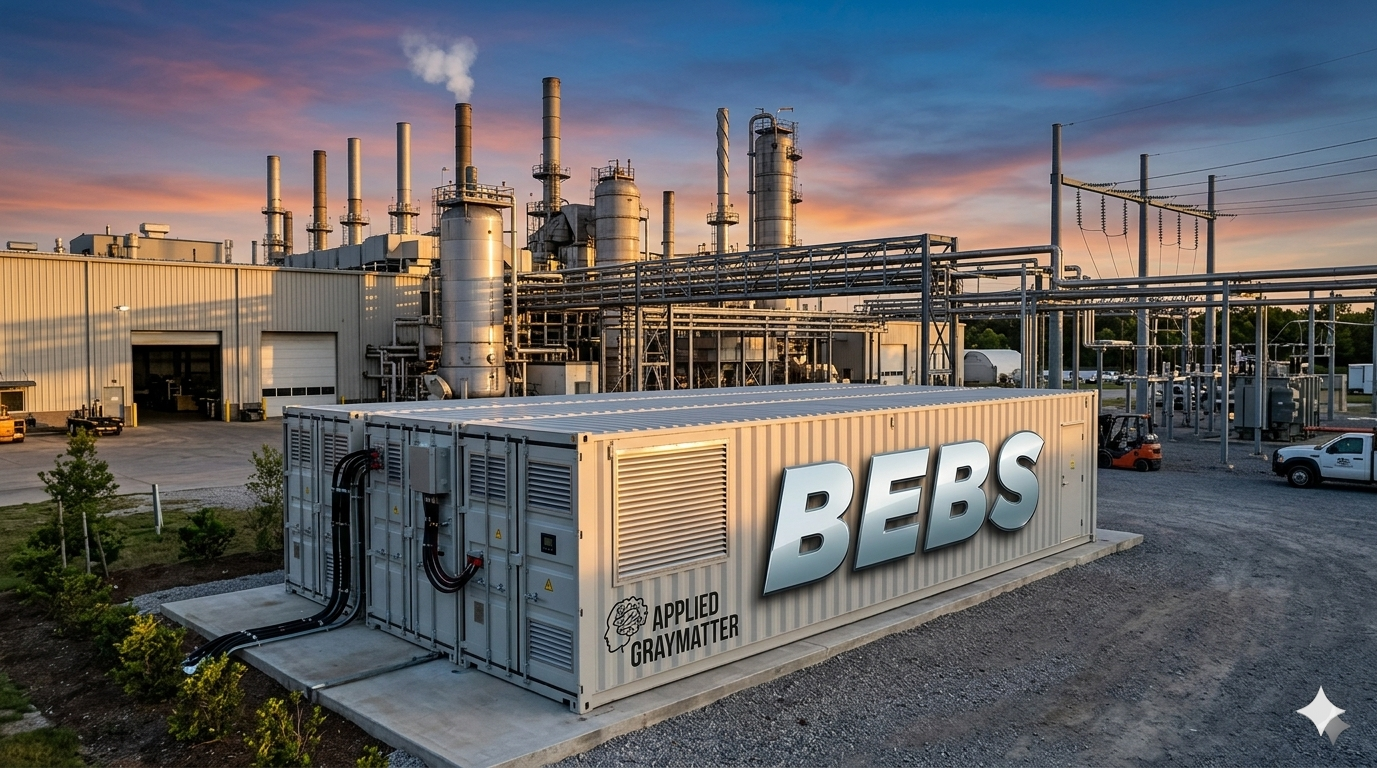
The reliability of expertly engineered industrial control panels is entirely dependent on the quality and continuity of the electrical supply. As industrial operations become less tolerant of unplanned downtime, resilient electrical infrastructure increasingly links controls, backup power, and overarching energy strategy. To answer this critical need, Applied Gray Matter offers the Battery Emergency Backup System (BEBS) for industrial and commercial use.
The BEBS is positioned strictly as an industrial-grade backup power platform, far exceeding the capabilities of a consumer-class UPS. It is designed to provide clean, reliable backup power characterized by low emissions, minimal noise, modular scalability, and UL-certified safety. BEBS is robust enough to support heavy industrial equipment, mission-critical office spaces, automated control systems, municipal utilities, and public infrastructure.
System Architecture and Capabilities
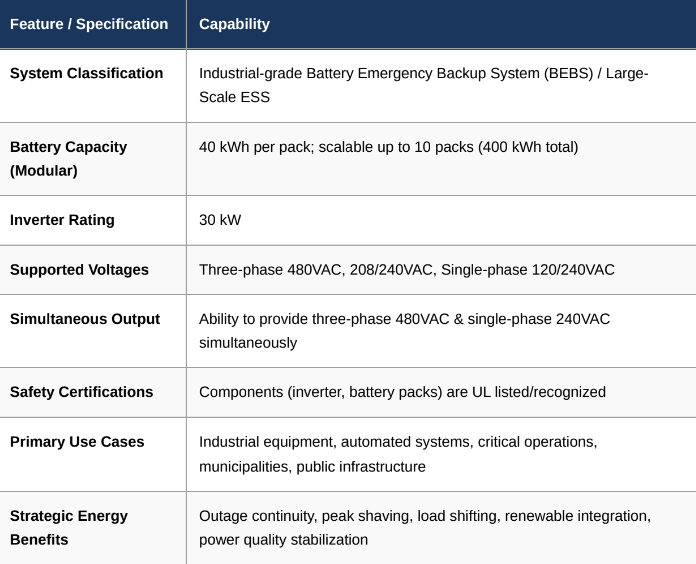
The physical and electrical architecture of the BEBS is built for the demands of industrial energy storage. It utilizes a modular approach to battery capacity, where each battery pack offers 40 kWh of storage. Facilities can seamlessly scale the system by adding up to 10 packs, achieving a massive 400 kWh total capacity. Power delivery is handled by an industrial-grade inverter rated at 30 kW.
Flexibility in power delivery is paramount for facility integration. The BEBS supports diverse input and output
voltages, including three-phase 480VAC, 208/240VAC, and single-phase 120/240VAC. Uniquely, the system has the ability to provide three-phase 480VAC and single-phase 240VAC simultaneously, allowing it to support both heavy machinery and standard facility loads from a single platform. All critical components, including the inverter and battery packs, are UL listed and recognized.
Strategic Benefits
Implementing a large-scale energy storage system like BEBS transcends basic emergency backup. The strategic benefits include:
- Operational Continuity: Millisecond transfer times keep sensitive PLCs, drives, and control systems online,
drastically reducing outage-related downtime risk.
- Power Quality: Shields industrial control panels and field devices from damaging voltage sags, spikes, and
transients.
- Advanced Energy Management: Enables peak shaving, load shifting, and seamless renewable energy
integration (e.g., solar).
- Long-Duration Backup: Provides hours of runtime to sustain production or execute safe, orderly shutdowns —capabilities well beyond a traditional UPS.
By pairing AGM’s control panel expertise with the BEBS, facilities establish an end-to-end resilient architecture where automation logic and the power required to execute it are both uncompromisingly secure.
Applied Gray Matter BEBS Technical Capabilities Summary
8. Frequently Asked Questions (FAQ)
What is a UL 508A industrial control panel?
A UL 508A industrial control panel is an assembly of components designed to control equipment, manufactured in compliance with the UL 508A standard. This ensures the panel adheres to strict safety protocols regarding wiring, component selection, enclosure ratings, and Short-Circuit Current Ratings.
Why is SCCR so important for OEMs?
SCCR (Short-Circuit Current Rating) determines the maximum fault current a panel can safely withstand. If an
OEM installs a panel where the available fault current exceeds the panel’s SCCR, it presents a severe safety risk and will fail NEC compliance inspections. Proper SCCR calculation prevents these costly misapplications.
Do control-only panels require an SCCR?
According to UL guidelines, panels that contain exclusively control circuits may not require an SCCR. However, if the panel incorporates at least one power circuit, an SCCR is strictly required.
What makes a dedicated OEM control panel shop different from a general electrical contractor?
An OEM control panel shop specializes in repeatable, highly documented, and certified manufacturing. They focus on providing complete engineering schematics, precise layout drawings, verified SCCR calculations, and consistent application of the UL Mark, ensuring seamless scaling for machine builders.
How does BEBS complement industrial control panels?
Industrial control panels rely on clean, continuous power to execute logic and prevent equipment damage. A BEBS (Battery Emergency Backup System) provides industrial-grade, long-duration backup power that protects these sensitive control systems from grid outages, voltage sags, and transients, ensuring operational continuity.
9. Conclusion
The design and fabrication of an industrial control panel is a highly specialized engineering discipline. As facilities push the boundaries of automation, the margin for error regarding electrical safety, code compliance, and thermal management shrinks to zero. Partnering with a qualified custom control panel manufacturer who deeply understands UL 508A and the intricacies of SCCR is no longer an optional luxury—it is a fundamental necessity for project success and personnel safety.
Applied Gray Matter brings this exact discipline to every project, operating as a certified UL 508A control panel designer and fabrication shop that prioritizes documentation, proper component application, and inspection readiness. When combined with advanced energy resilience solutions like the industrial-grade Battery Emergency Backup System (BEBS), AGM delivers the complete electrical foundation required for modern, uninterrupted operations.
READY TO ENGINEER YOUR NEXT PROJECT?
If you require expertly engineered UL 508A control panels, standardized OEM panel programs,
complex retrofits, or are planning to deploy a Battery Emergency Backup System (ESS), contact
Applied Gray Matter today. Partner with a single-source authority for design, fabrication, and longterm support.
10. References and Source Notes
The technical standards, definitions, and capabilities cited in this white paper are grounded in the following
resources and standard practices:
- Applied Gray Matter UL 508A Services: appliedgraymatter.com/services/ul-508a/
- Applied Gray Matter OEM Panel Shop Guide: appliedgraymatter.com/industrial-control-panels-ul-508aplc-scada-oem-panel-shop/
- Applied Gray Matter Battery Emergency Backup System (BEBS):appliedgraymatter.com/services/battery-emergency-backup-system/
- UL Solutions Panel Shop Program & Standards: ul.com/services/industrial-control-panels-and-panel-shopprogram
- UL Solutions SCCR Guidelines for Machinery: ul.com/resources/determining-short-circuit-current-ratingsccr-machinery
- National Electrical Code (NEC): Article 409 (Industrial Control Panels)