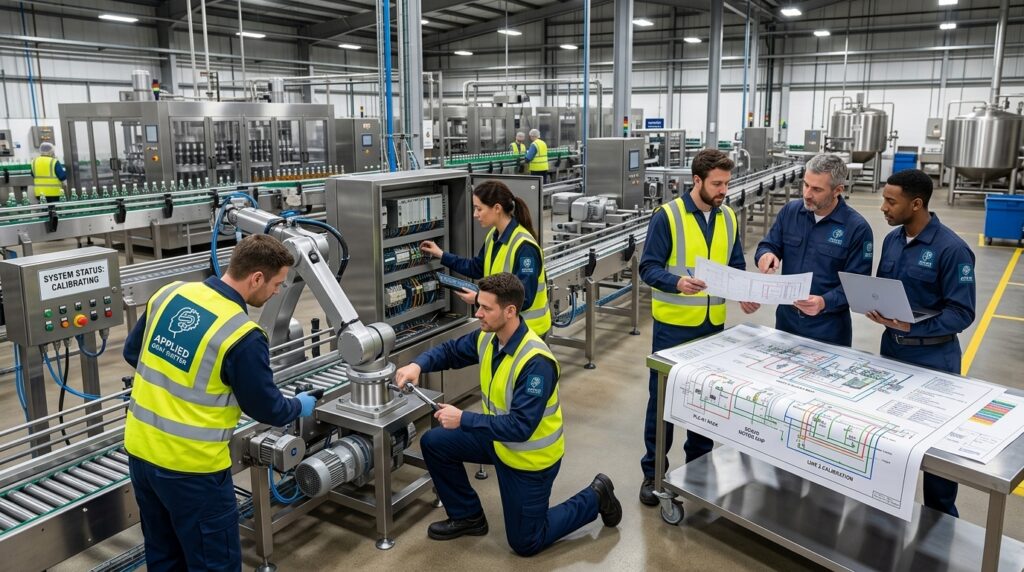
Experienced UL 508A Control Panel Fabrication & Other Emergency Services, Ready When Your Plant Can’t Wait
Experienced UL 508A Control Panel Fabrication, Ready When Your Plant Can’t Wait When a control panel fails, an automated line...

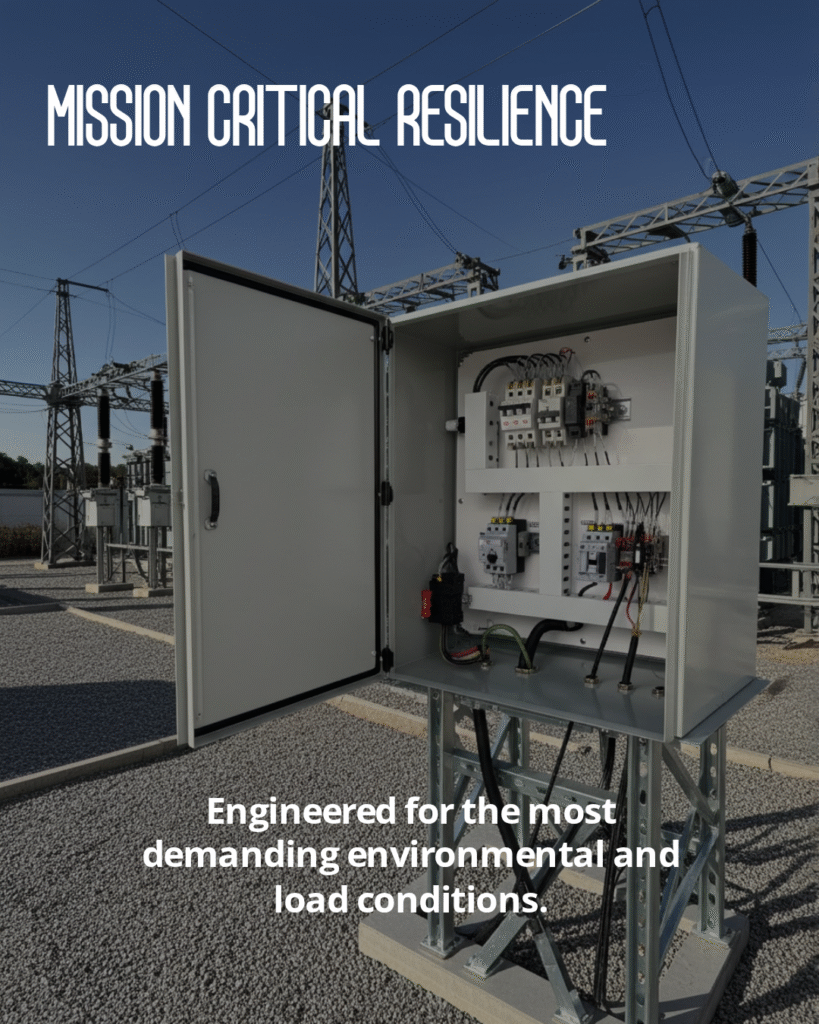
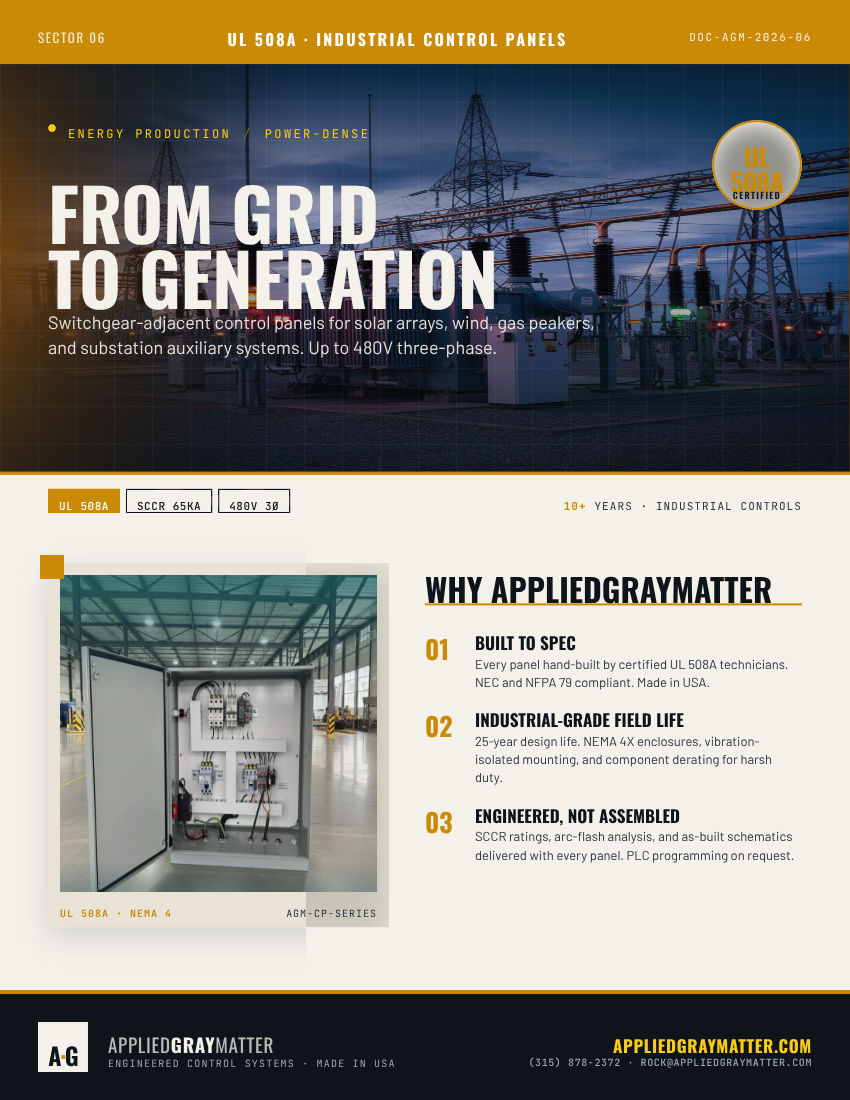
Selecting a UL 508A certified panel shop is not only a compliance decision; it is a risk-management, procurement, operations, and lifecycle-cost decision. UL Solutions states that its Industrial Control Panel Shop Program allows qualified manufacturers to apply UL certification marks at the factory, while covering component usage, environmental ratings, wiring, motor protection, safety markings, and conformance to the National Electrical Code (NEC) and Canadian Electrical Code (CEC).
For owners, OEMs, system integrators, EPC firms, and facility operators, the practical value is twofold. In the short term, a certified shop can reduce approval friction, help avoid red-tagged panels, and improve confidence that the assembly was built by personnel trained to interpret UL 508A correctly. In the long term, the same decision supports safer operation, cleaner documentation, more consistent sourcing decisions, better maintainability, and lower exposure to redesigns or costly field corrections when systems are expanded or audited.
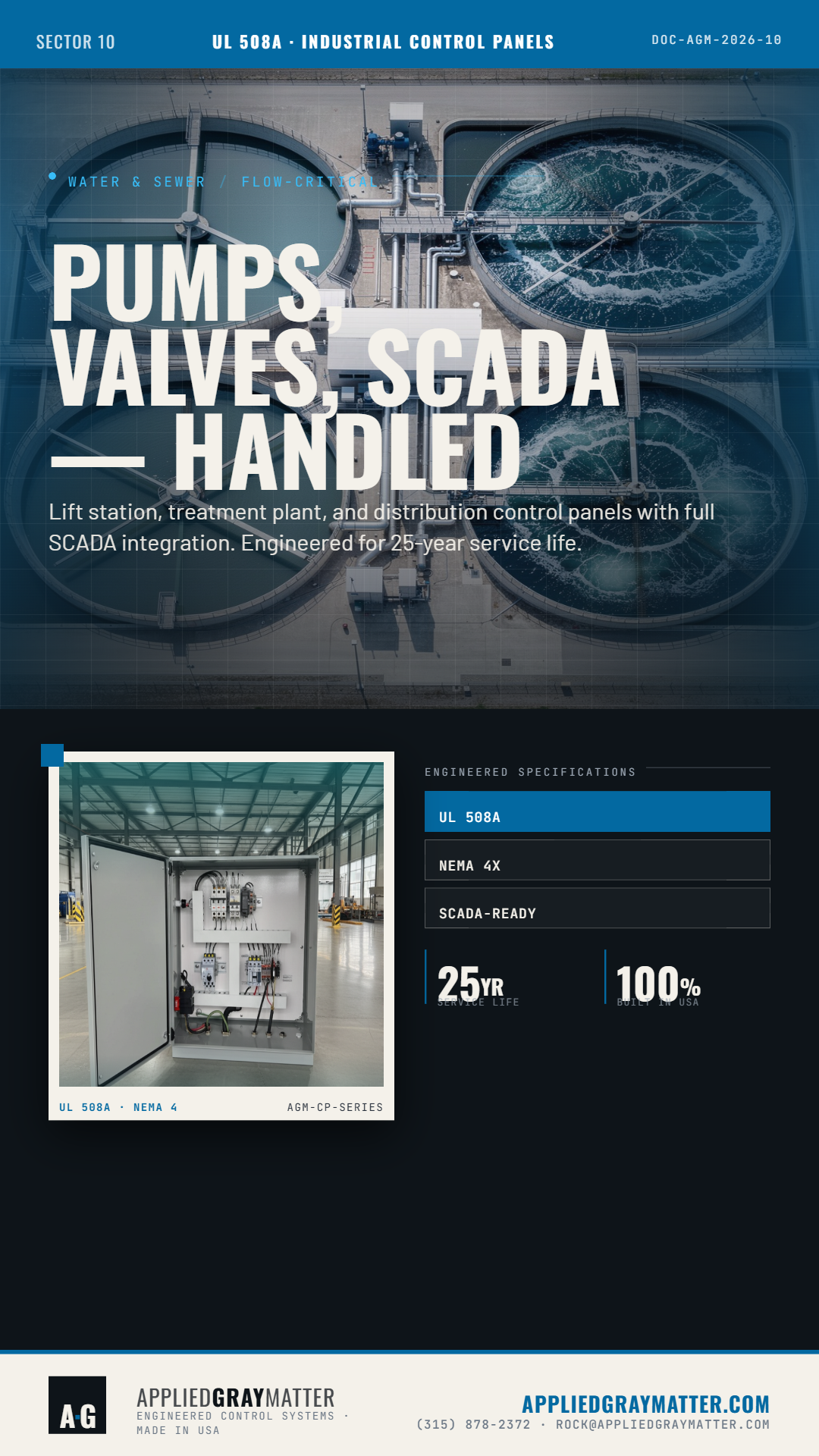
UL Solutions describes an industrial control panel as an assembly of two or more power or control circuit components, such as switches, terminal blocks, contactors, motor drives, transformers, and overcurrent protective devices. Within the UL 508A Industrial Control Panel Shop Program, participating manufacturers must complete mandatory training on the standard and maintain at least one qualified manufacturer technical representative at each manufacturing location who can interpret and apply UL 508A requirements accurately.
That distinction matters because many buyers assume all panel shops build to the same standard. They do not. A certified UL 508A panel shop operates within a structured framework for component selection, enclosure ratings, wiring practices, markings, motor protection, and code alignment, rather than relying only on tribal knowledge or ad hoc interpretation. UL also notes that Supplement SA is used to determine requirements for components used in industrial control panels, which reinforces that compliant panel construction depends heavily on validated component application, not just basic assembly skill.
Faster approvals and fewer project delays
UL Solutions says the UL Mark is widely accepted by regulatory authorities in every jurisdiction in the U.S. and Canada, and that the program helps minimize red-tagged panels at the job site along with the resulting delays and extra cost. For project teams, that translates into less uncertainty during inspection, startup, and turnover.
When a panel arrives without recognized certification or with questionable markings, documentation, or component application, the burden often shifts to the owner, contractor, or integrator to explain design choices in the field. Choosing a certified shop helps move that work upstream into engineering and manufacturing, where errors are less expensive to correct.
UL Solutions states that regulators, specifiers, and end-product certifiers use the UL Mark as evidence that certification requirements have been met. This matters because the commercial value of a panel is not determined only by whether it powers up; it is determined by whether it can be installed, accepted, energized, and documented without dispute.
For facility owners and machine builders, that acceptance can shorten commissioning timelines and reduce the soft costs of back-and-forth clarification. It also improves bid defensibility when project specifications call for UL-certified industrial control panels.
UL Solutions states that the program covers proper component usage and that Supplement SA provides specific component requirements for industrial control panels. In practical terms, that means a certified shop has a compliance framework for deciding whether components are acceptable in the panel context, rather than discovering incompatibilities after fabrication.
This short-term benefit is often underestimated. Component substitution, insufficient short-circuit considerations, incorrect disconnect selection, or improper use of overcurrent devices can force redesign late in the project. UL’s own FAQ illustrates this point by noting, for example, that a UL 508A disconnect is not suitable as the main means of isolation, and that isolation should instead use a UL 98 disconnect or UL 489 circuit breaker in that context.
A high-quality UL 508A build process naturally encourages better panel labeling, device identification, and conformance markings because those elements are not decorative; they are part of a compliant assembly approach. Better documentation at shipment makes startup technicians, maintenance teams, and future retrofit engineers more effective from the first day the panel enters service.
Lower total cost of ownership
The cheapest panel at purchase is often the most expensive panel over its service life. UL Solutions emphasizes building safety in, using appropriate components, preventing overcrowding and thermal stress, and selecting ratings that fit the application in order to improve reliability and long-term performance.
Over time, these disciplines reduce the likelihood of nuisance failures, overheating, premature component degradation, undocumented field modifications, and expensive service events. Even when the initial quoted price is higher, the lifecycle economics are often better because downtime, reinspection, troubleshooting labor, and replacement risk are materially lower.
Facilities change. Loads increase, control strategies evolve, and digital connectivity becomes more important. A panel built by a certified shop is more likely to begin with clearer design logic, documented component usage, and markings that support safer troubleshooting and future modifications.
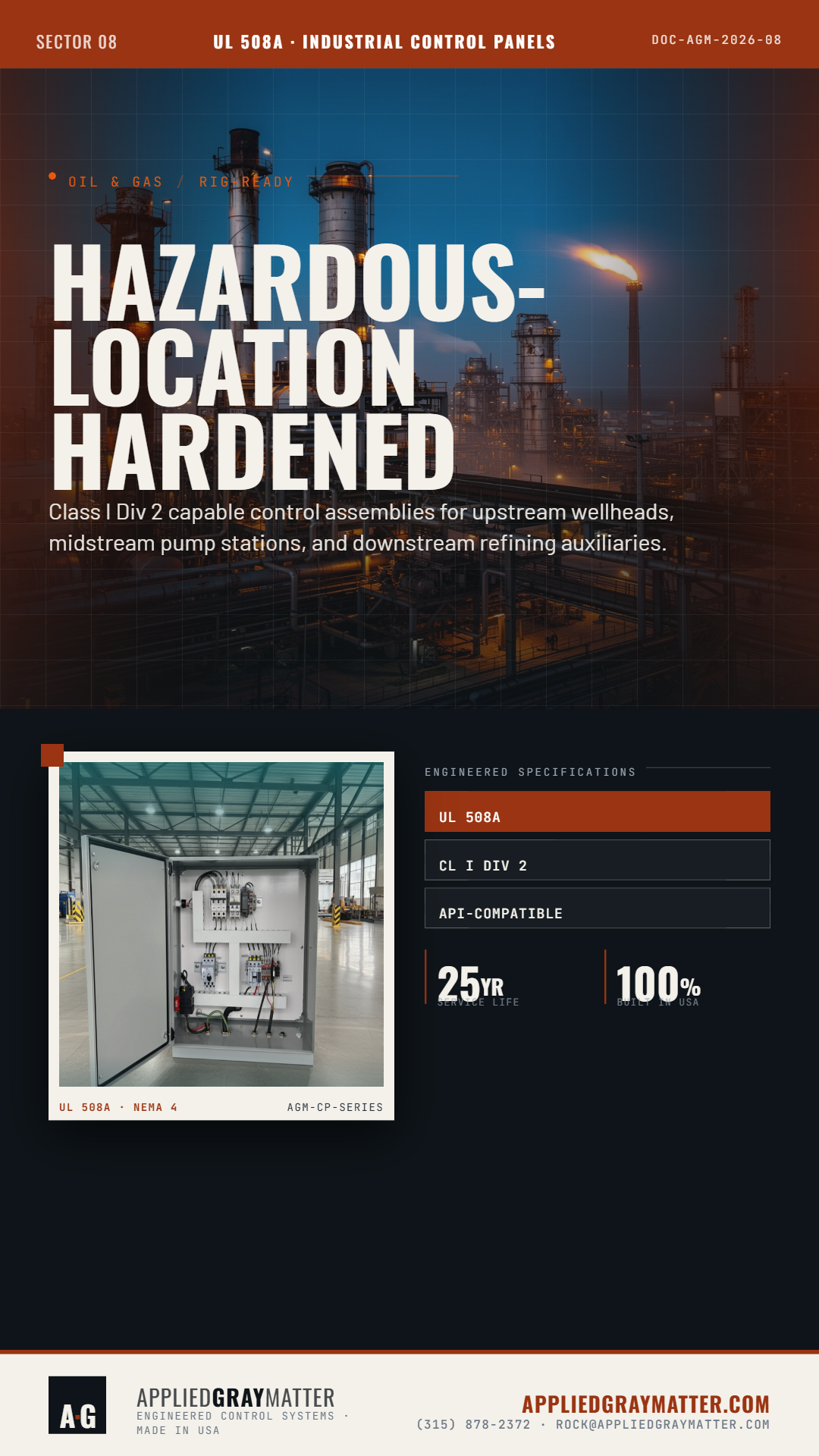
This becomes especially important when the equipment changes hands internally. The engineer who specified the panel may not be the maintenance manager who inherits it two years later. Well-built, properly marked, standards-based panels retain operational clarity long after project memory fades.
UL Solutions states that the program aligns panel construction with NEC and CEC requirements, while Supplement SA is updated as needed when changes occur in the use of components in panels. That creates a stronger foundation for future audits, customer qualification reviews, insurer questions, and cross-border projects where documentation quality matters.
Related standards also continue to evolve. NFPA 79’s 2024 edition, for example, includes updated clarification on short-circuit current rating treatment for multi-panel machine electrical equipment and revised marking requirements adjacent to machine supply disconnecting means. Choosing a certified panel shop does not eliminate every future design review, but it significantly improves the odds that the original panel was built with a standards-aware discipline that can withstand later scrutiny.
When a control panel is involved in an incident, procurement shortcuts become easy to spot in hindsight. A documented choice to use a certified UL 508A shop demonstrates that the buyer prioritized recognized construction methods, trained personnel, and a certification pathway accepted by authorities across the U.S. and Canada.
That does not replace engineering judgment or site-specific risk assessment, but it does strengthen the credibility of the specification and purchasing decision. For OEMs and integrators, that credibility also supports brand trust with end users who increasingly expect documented compliance, not informal assurances.
Not all UL 508A panel shops deliver the same commercial value. UL certification establishes an important baseline, but sophisticated buyers should still evaluate engineering depth, application experience, documentation quality, testing discipline, responsiveness during submittals, and the shop’s ability to support custom or complex builds within a compliant framework.
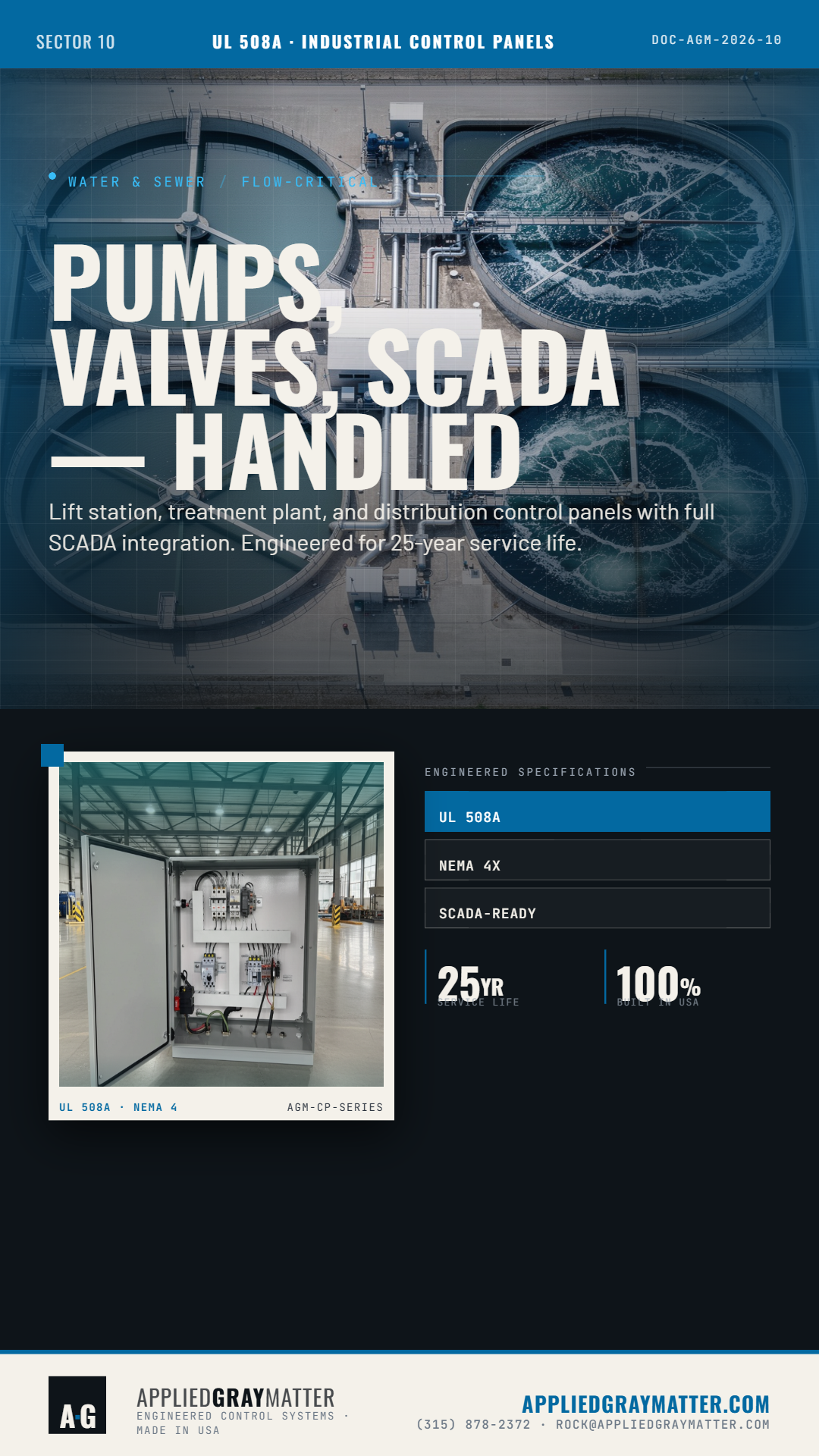
A stronger shop does more than “put a label on the box.” It helps customers interpret requirements early, select compliant components intelligently, document short-circuit and protection decisions clearly, and avoid costly ambiguity before fabrication starts. That combination of compliance plus application engineering is what creates genuine Experience, Expertise, Authoritativeness, and Trustworthiness in the eyes of buyers and search engines alike.
A serious evaluation process should ask whether the shop can demonstrate:
For a company such as Applied Gray Matter, the strategic opportunity is not to claim that certification alone makes a panel superior. The stronger argument is that certified manufacturing, when paired with disciplined engineering and responsive project support, gives customers a measurable advantage across schedule, safety, maintainability, and asset life.
Most competitor pages targeting “control panels” or “UL 508A panels” stop at broad claims such as safety, compliance, or quality. To outperform them, content should explain the operational consequences of panel-shop selection in language that serves procurement teams, engineers, plant managers, and commercial decision-makers simultaneously.
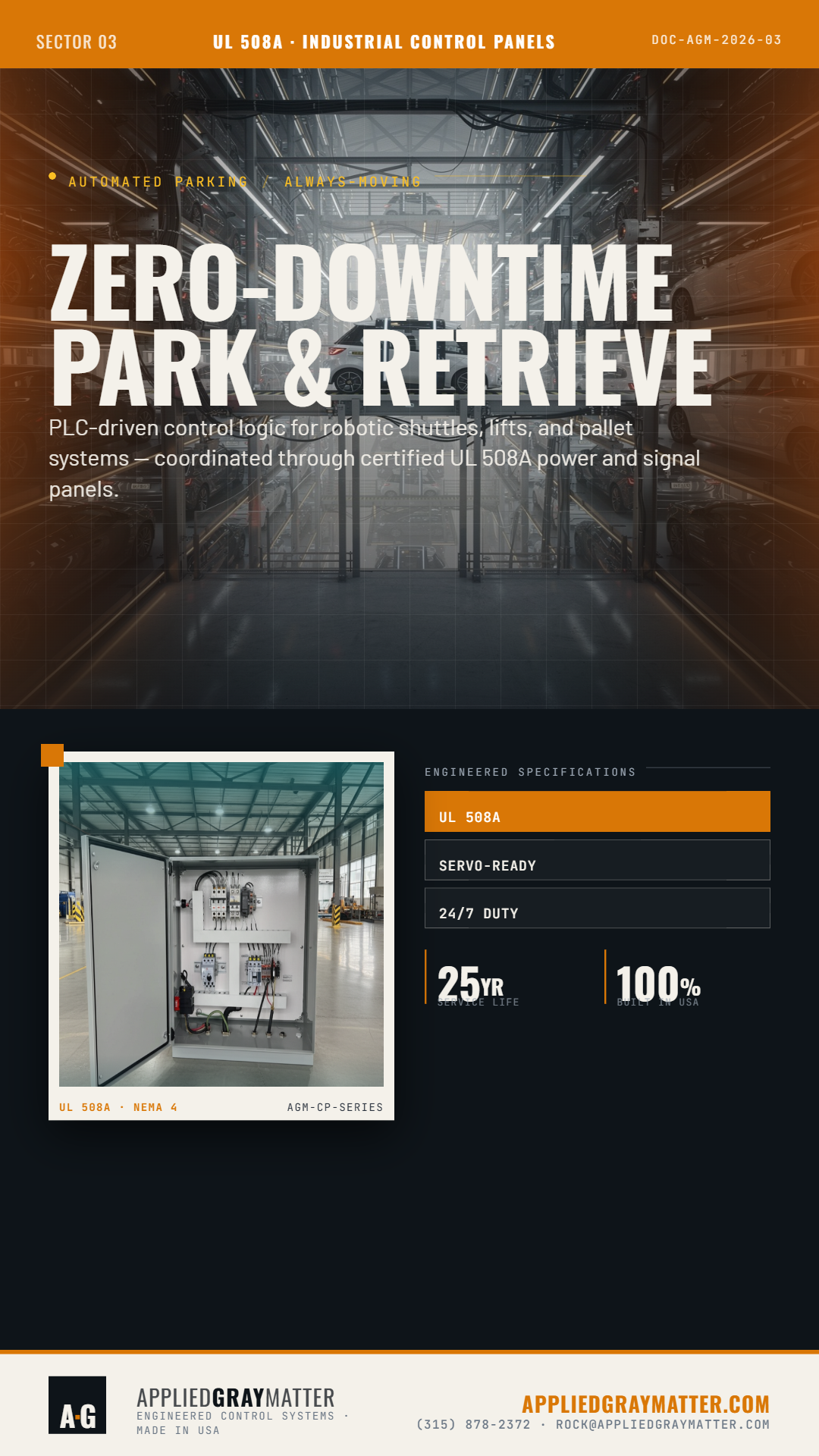
The content should therefore emphasize:
Choosing a UL 508A certified panel shop is one of the few purchasing decisions that can improve safety, speed approvals, reduce field rework, protect long-term maintainability, and strengthen compliance confidence at the same time. The value is immediate during procurement and commissioning, and it compounds over the life of the equipment through lower operational risk and better lifecycle performance.
For organizations buying industrial control panels, certification should be treated as a strategic filter, not a marketing extra. UL Solutions’ own program description shows that a certified shop brings trained personnel, structured compliance controls, recognized markings, broader authority acceptance, and a process intended to reduce jobsite delays and extra cost.
In the short term, that means faster approvals, fewer surprises, and smoother project execution. In the long term, it means a more maintainable, more defensible, and often less costly control system asset over its useful life, especially when the certified shop also brings strong engineering execution and documentation discipline.
Experienced UL 508A Control Panel Fabrication, Ready When Your Plant Can’t Wait When a control panel fails, an automated line...
Field-Engineering Playbook · Reliability & Commissioning Industrial Machine Downtime Is a Solvable Engineering Problem — Here’s the Playbook We Use...
Our team at Applied Gray Matter is ready to collaborate with you to create optimal custom controls for any OEM application. Call Us (315) 878-2372 or click ‘Schedule a Consultation’ to get started.