Industrial Control Panels for PLC, SCADA & OEM Machines: How to Specify a UL 508A Control Panel Fabrication Shop (Without Commissioning Surprises) By Applied Gray Matter — UL 508A Panel Fabrication + Industrial Controls Engineering
When OEM machine builders, system integrators, and plant engineering teams search “control panels,” they’re usually not looking for a generic electrical box—they’re looking for an industrial control panel that can survive production reality: fast startups, clean troubleshooting, safe maintenance, and predictable inspections.
This guide is written for industrial automation teams building or buying panels for PLCs, safety systems, VFDs/servo drives, remote I/O, industrial networking, and SCADA. It also addresses a frequent RFQ phrase we see: “UL505A control panel fabrication shop”—and how to handle that requirement without risking compliance confusion. (More on that below.)
UL508A Control Panel Fabrication Shop AppliedGrayMatter.com & Cabinet Certification For All Industries
What “Control Panels” means in industrial automation (PLC + SCADA reality)
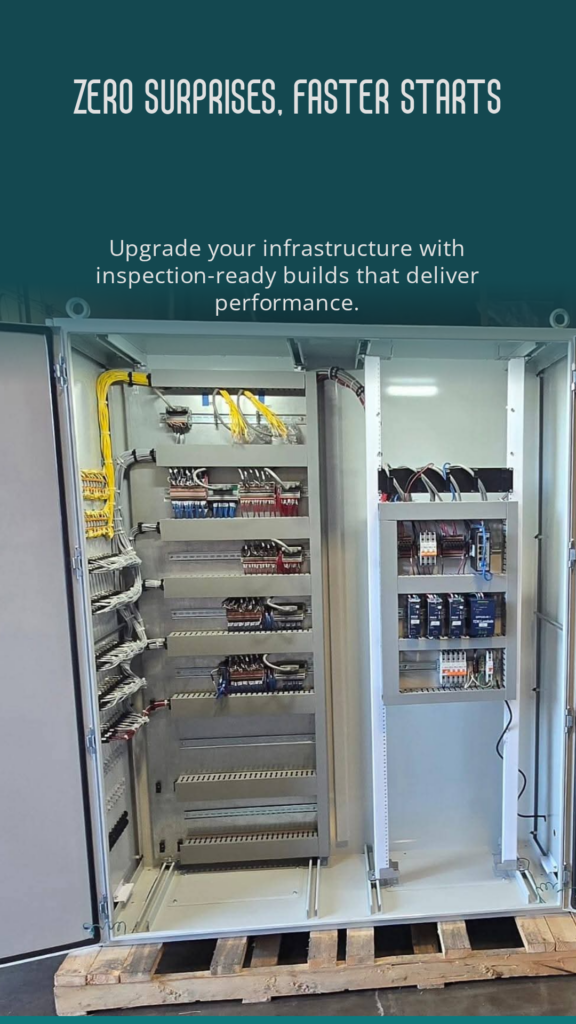
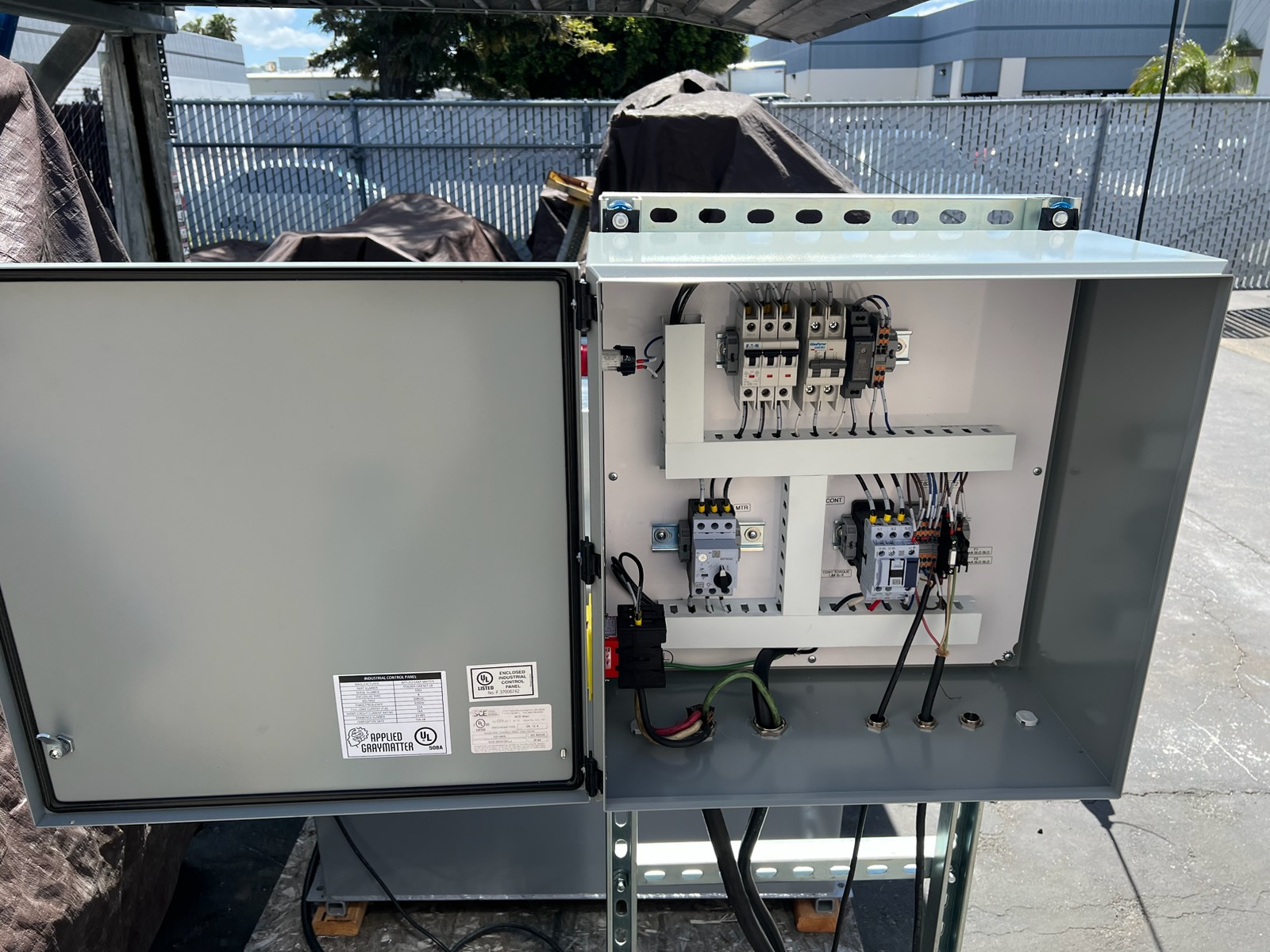
An industrial control panel (ICP) is a complete assembly (enclosure + power distribution + control components + wiring + labeling + documentation) used to control industrial equipment—packaging lines, conveyors, skids, process equipment, robots, utilities, and building/plant subsystems.
The reason the standard matters: UL notes that its Industrial Control Panel Shop Program supports panels built to UL 508A, addressing topics like component usage, enclosure environmental ratings, wiring, motor protection, safety markings, and conformance to U.S./Canada requirements. Source
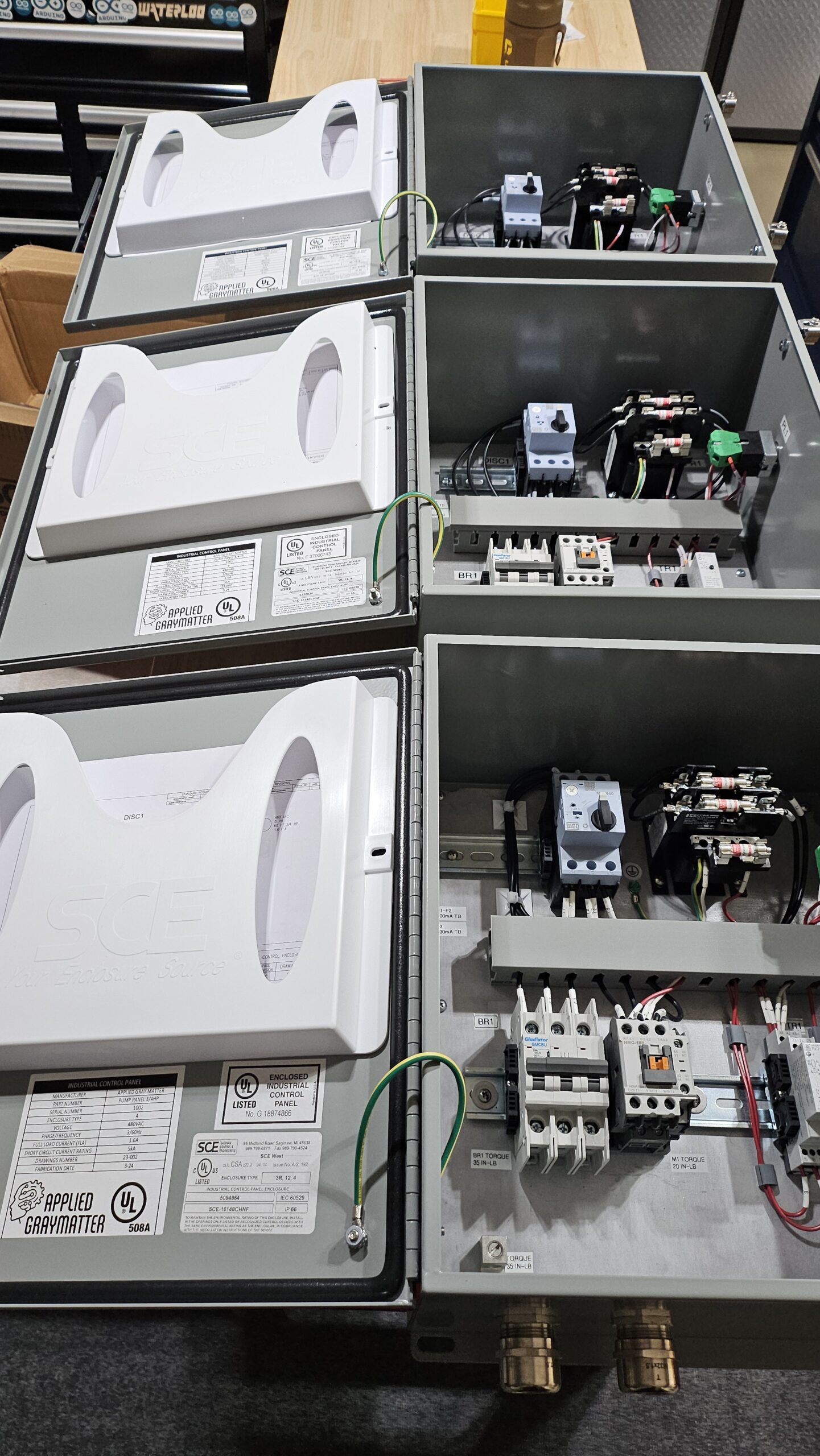
UL508A Control Panel Fabrication Shop AppliedGrayMatter.com & Cabinet Certification For All Industries
Why UL 508A is the “panel shop” standard buyers actually mean
UL describes UL 508A as the industry-accepted standard for industrial control panels, and explains that membership in its shop program allows qualified manufacturers to apply the UL Mark to compliant panels at their facility—an efficient path to certification and widely recognized by regulators and specifiers. Source
The buyer benefit (in plain language)
Another UL 508A-certified panel shop explains the operational upside clearly: faster inspections, project-ready panels that are fully labeled/documented, and fewer field surprises that create rework or delays. Source
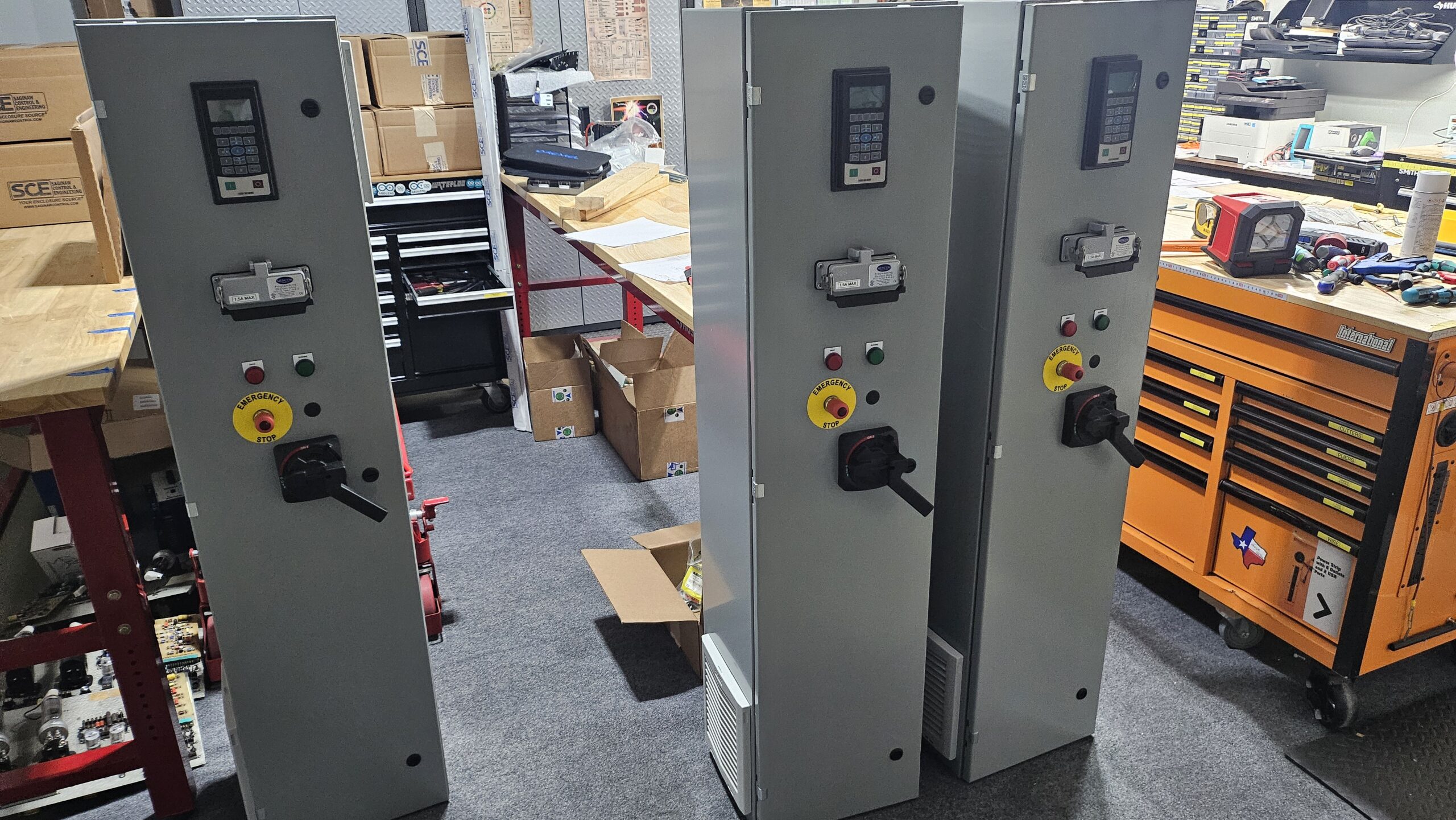
UL508A Custom Industrial Control Panel Designer and Manufacturer By AppliedGrayMatter.com
The “UL505A Control Panel Fabrication Shop” keyword: how to treat it correctly (and safely)
We do see vendors and integrators refer to CSA / UL 505A in the context of industrial control panels (example: Enjanniere states their “electrical control panels follow CSA / UL 505A” terminology). Source
How we recommend handling it (OEM-safe approach):
- Treat UL505A language as a requirements clarification trigger (jurisdiction, end-use, and acceptance path).
- Then align the build/documentation around the industrial control panel standard your AHJ/market expects—commonly UL 508A for industrial control panels in the U.S./Canada—so you don’t end up with a panel that “works” but becomes an inspection problem.
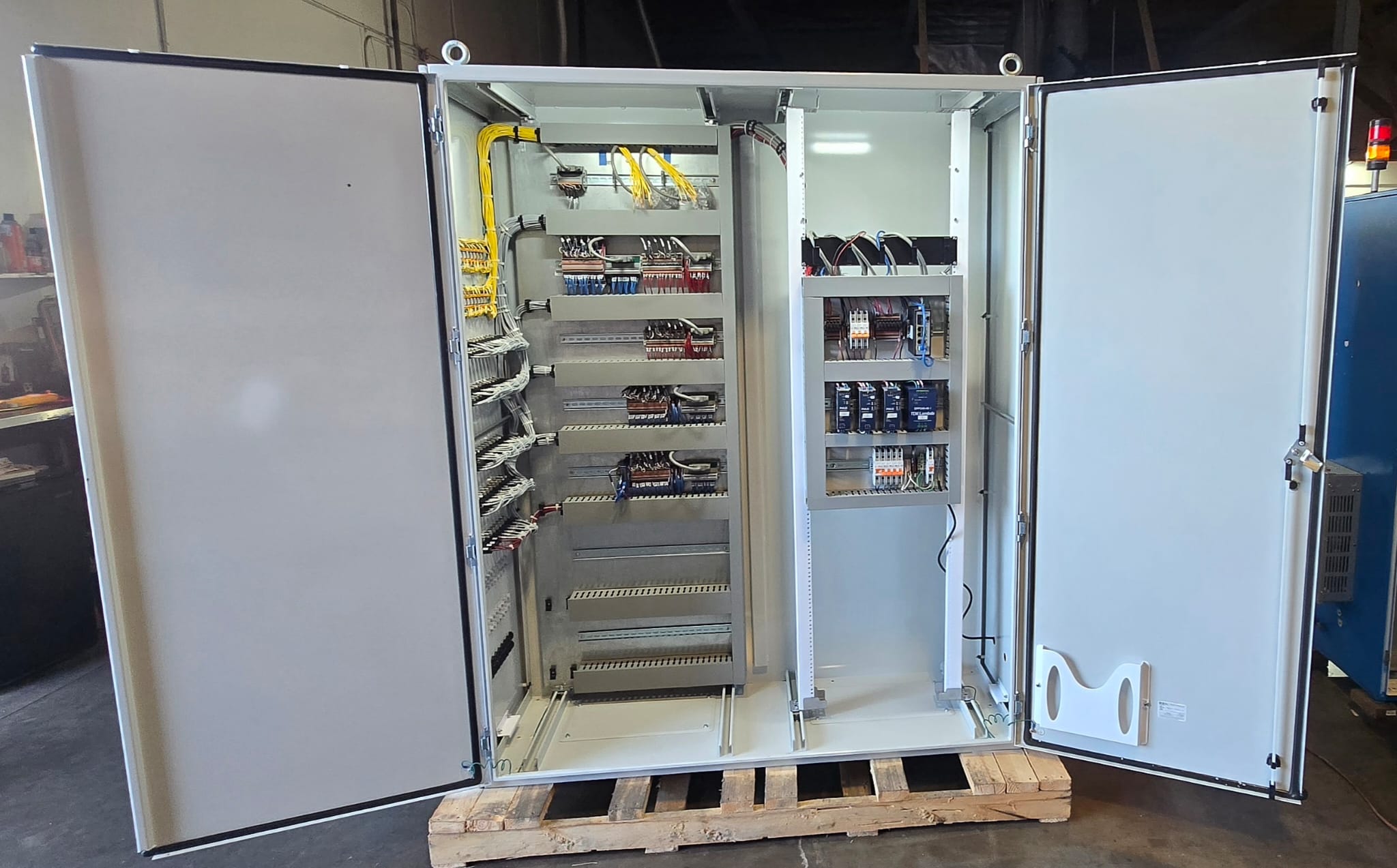
UL508A Custom Industrial Control Panel Designer and Manufacturer By AppliedGrayMatter.com
The inspection-ready checklist for OEM PLC/SCADA control panels (steal this for your RFQs)
This section is intentionally practical—modeled after what actually causes delays, rework, and field troubleshooting drag.
1) Component selection: “Listed vs Recognized” + permitted-use discipline
A key misconception (Vertech calls it out directly): a UL 508A panel shop can’t simply “certify anything”—the design must also meet UL 508A requirements, especially around component selection and panel design/labeling discipline. Source
What to require:
- BOM identifies UL status where relevant
- Manufacturer installation/protection constraints are followed for recognized components
- No “mystery parts” substituted late without engineering review
2) SCCR: the most common “late-stage surprise” for OEM machines
UL’s SCCR guidance reinforces why SCCR matters and how it shows up in real plants: every panel in a machine system may need SCCR marked, and SCCR must be adequate relative to available fault current at the supply terminals. UL also notes practical realities like terminal blocks having default SCCR values and clarifies when SCCR may not be required (e.g., only control circuits). Source
What to require:
- SCCR method + assumptions documented
- SCCR clearly marked on the nameplate where required
- Component SCCR coordination checked (not guessed)
3) Overcurrent protection & conductor sizing (where panels frequently fail inspection)
Cates publishes a highly useful “15 common pitfalls” list. The failure modes are painfully familiar to OEMs: improper branch circuit protection sizing, incorrect wire gauge, SCCR coordination gaps, and documentation/marking misses. Source
What to require:
- Protection schedule is part of the submittal
- Wire gauge and distribution sizing rules are explicitly followed
- Document package includes required markings (not just the physical panel)
4) Documentation that makes troubleshooting fast (OEM lifecycle cost reducer)
Vertech emphasizes that UL-minded panels require drawings, and that wires and devices must be labeled to match drawings; drawings include items like FLA and callouts for wire and fuse sizes, and standardized marking includes SCCR and enclosure/environment info. Source
OEM deliverables you should request every time:
- Electrical schematics + panel layout
- Terminal schedule + wire labels aligned to prints
- Nameplate and marking package aligned to SCCR/environment
What Applied Gray Matter delivers for OEMs (PLC-first, automation-first)
On our UL 508A fabrication page, we’re explicit about the deliverables OEMs actually need:
- Panel documentation: schematics, layout drawings, SCCR calculations, accurate labeling
- Panels built with UL-listed/recognized components, correctly sized conductors, properly rated overcurrent protection
- SCCR clearly marked on the nameplate
- Collaboration so the enclosure “interfaces cleanly with your field devices, PLCs, and upstream systems”
- Services including design review, BOM verification, and standardization on supportable components
Source
If you want a “deeper authority read” to internally link from this post (and to keep visitors on your site longer), AGM already has a long-form UL 508A thought-leadership article you can reference as a supporting pillar page. Source
Add visuals (recommended placements + legally-safe sources from Creative Commons filtering)
If you embed 2–3 images, this post will read like an “ultimate guide” (and tends to improve time-on-page).
Hero / header image options:
Alt text examples (SEO-friendly, not spammy):
- “UL 508A industrial control panel enclosure with wiring and terminals”
- “PLC control panel layout with labeled conductors and protection devices”
(Per licensing constraints on this topic, stick to the images above or ask me to run a new licensed-safe image search with a different angle.)
Optional embedded video (adds authority + user engagement)
A solid “how control panels are built” explainer video can help you compete on the broader “control panels” query intent:
(Use one—don’t overload the page.)
FAQ (written to win featured snippets)
What is a UL 508A panel shop?
UL explains its Industrial Control Panel Shop Program allows qualified panel shops to apply the UL Mark to industrial control panels built at their facility, providing an efficient and widely recognized path to certification. Source
Why does SCCR matter for OEM machines?
UL notes SCCR must be adequate relative to available fault current at the supply terminals and provides practical guidance for multi-panel machines and marking. Source
What commonly causes UL 508A inspection issues?
AppliedGrayMatter.com lists common pitfalls like improper protection sizing, SCCR coordination gaps, wire sizing issues, and missing documentation/markings. Source
Do you integrate with PLC/field devices?
AGM explicitly states its designers work with automation teams so panels interface cleanly with field devices, PLCs, and upstream systems. Source