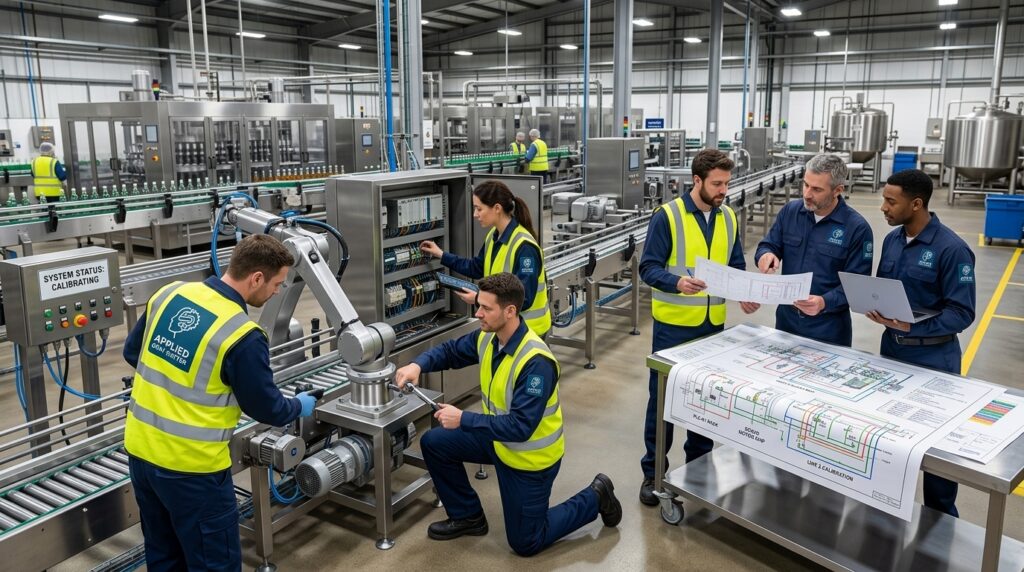
Experienced UL 508A Control Panel Fabrication & Other Emergency Services, Ready When Your Plant Can’t Wait
Experienced UL 508A Control Panel Fabrication, Ready When Your Plant Can’t Wait When a control panel fails, an automated line...

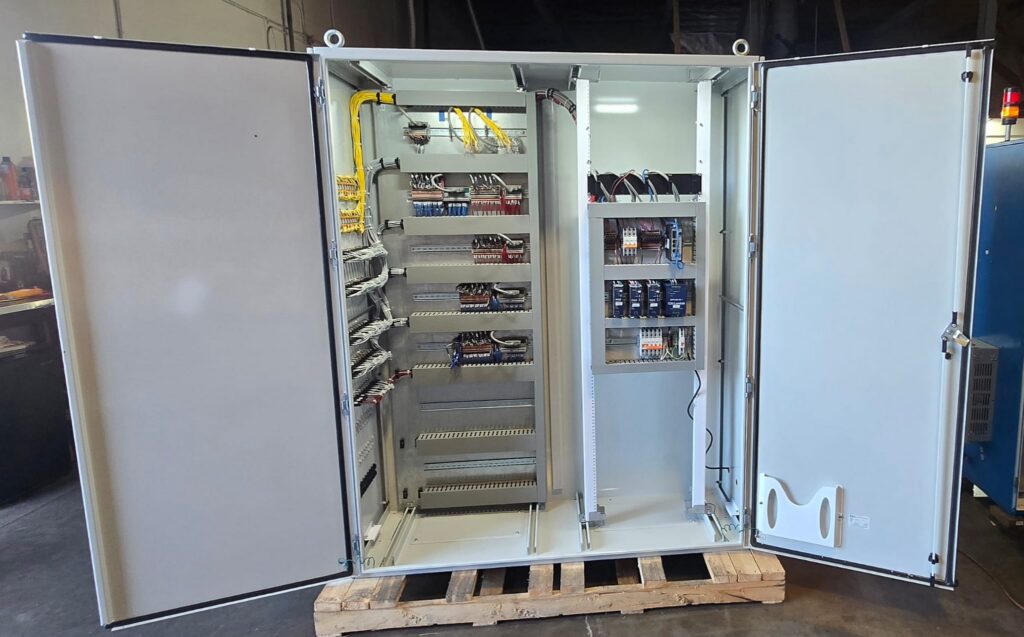
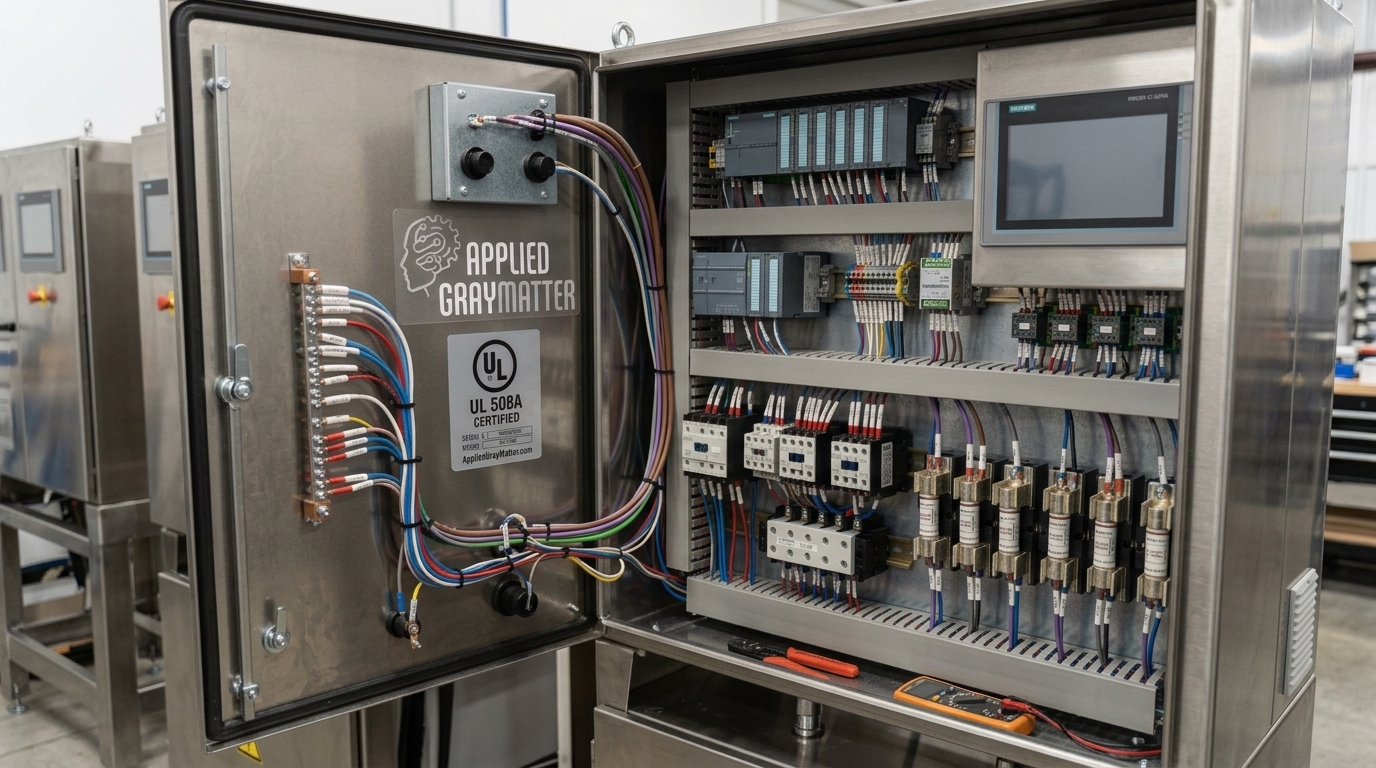
Custom Industrial Control Panels Manufactured By AppliedGrayMatter.com UL 508A Fabrication Shop in California And All Across The US (315) 878-2372 For Industrial Facilities
Your control panels should keep production moving—not hold it back.
Every machine builder, automation integrator, and production manager eventually faces the same sourcing question: who will fabricate the industrial control panels at the heart of our equipment, and can they do it to specification, on schedule, and with the documentation our project requires?
Applied Gray Matter provides UL 508A control-panel fabrication in Anaheim, California, for manufacturers and machine builders who need dependable workmanship, flexible production capacity, and a partner that takes delivery commitments seriously. From a custom panel for a specialized machine to a production order of 100 panels, we build to your specifications with a disciplined approach to assembly, quality, and scheduling.
One point of clarity before we go further: Applied Gray Matter fabricates panels from our Anaheim, California facility. The state-by-state sections below do not describe additional Applied Gray Matter locations. They examine the manufacturing landscape in each state and the supplier-selection considerations that matter when engineering and procurement teams there are evaluating a control panel manufacturer—whether that search stays local or extends to a regional fabrication partner in Southern California.
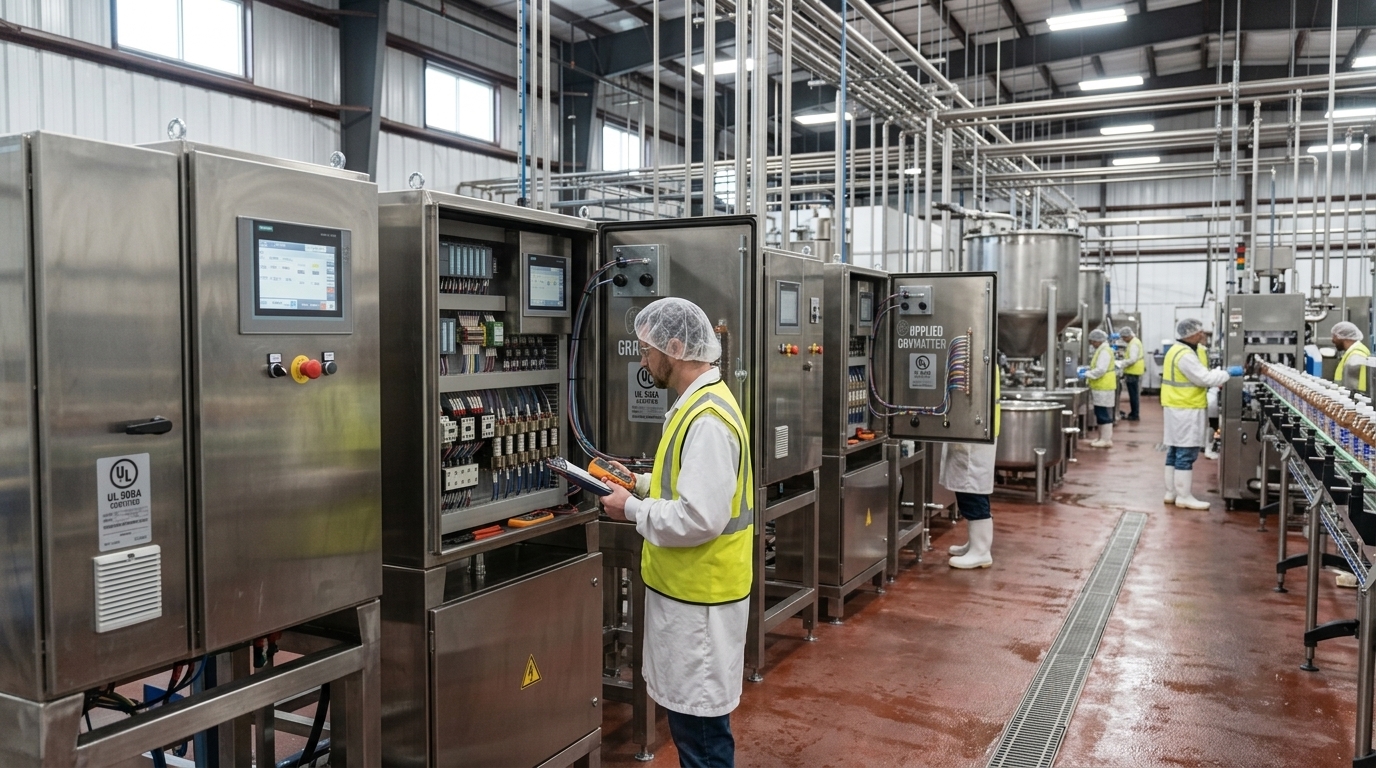
Custom Industrial Control Panels Manufactured By AppliedGrayMatter.com UL 508A Fabrication Shop in California (315) 878-2372 For Food and Beverage Manufacturing Plant Facilities
The term “UL 508A” gets used loosely in industrial sourcing conversations, so it is worth being precise about what it covers.
UL 508A is the UL Standard for Safety for Industrial Control Panels. Published in 2001, it was the first industry standard to cover complete industrial control panel assemblies, establishing requirements for how panels are built, labeled, and tested (UL Standards & Engagement). Its purpose is to provide a cohesive safety framework for panel assemblies and minimize the risks of fire, electric shock, and equipment failure, including a method for calculating and marking a panel’s short-circuit current rating (SCCR) (UL Standards & Engagement).
The standard covers industrial control panels intended for general industrial use, operating at 1,000 volts or less, for installation in ordinary locations in accordance with the National Electrical Code (UL Standards & Engagement).
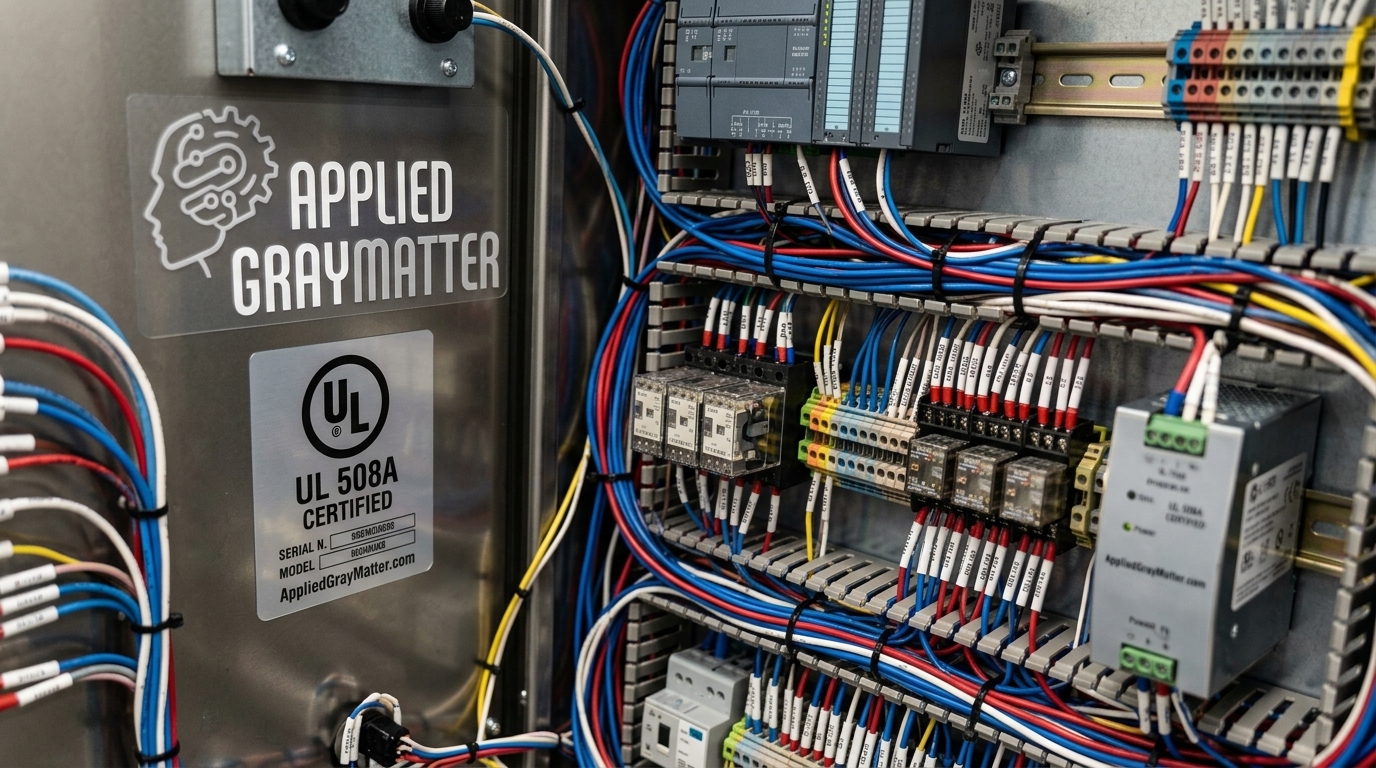
Custom Industrial Control Panels Manufactured By AppliedGrayMatter.com UL 508A Fabrication Shop in California (315) 878-2372 For Industrial Facilities
The UL 508A Panel Shop Program allows participating manufacturers to apply UL Certification Marks for U.S. and Canadian markets at their factories—on custom-built or mass-produced panels alike—without UL examining each individual design (UL Solutions). Participating shops must complete required training and maintain at least one UL 508A-qualified manufacturer technical representative at each manufacturing location (UL Solutions). The program addresses component use, enclosure environmental ratings, wiring, motor protection, safety markings, and conformance with the National Electrical Code and Canadian Electrical Code (UL Solutions).
One boundary that matters to project planning: UL 508A certification covers the control panel itself. For an enclosed industrial control panel, that means the enclosure and the components inside it or mounted to its walls (UL Solutions). It does not cover the connected loads or equipment the panel controls, such as motors, heaters, or other utilization equipment (UL Solutions). A panel shop that is candid about this scope boundary is one that understands the standard; treat it as a buying signal.
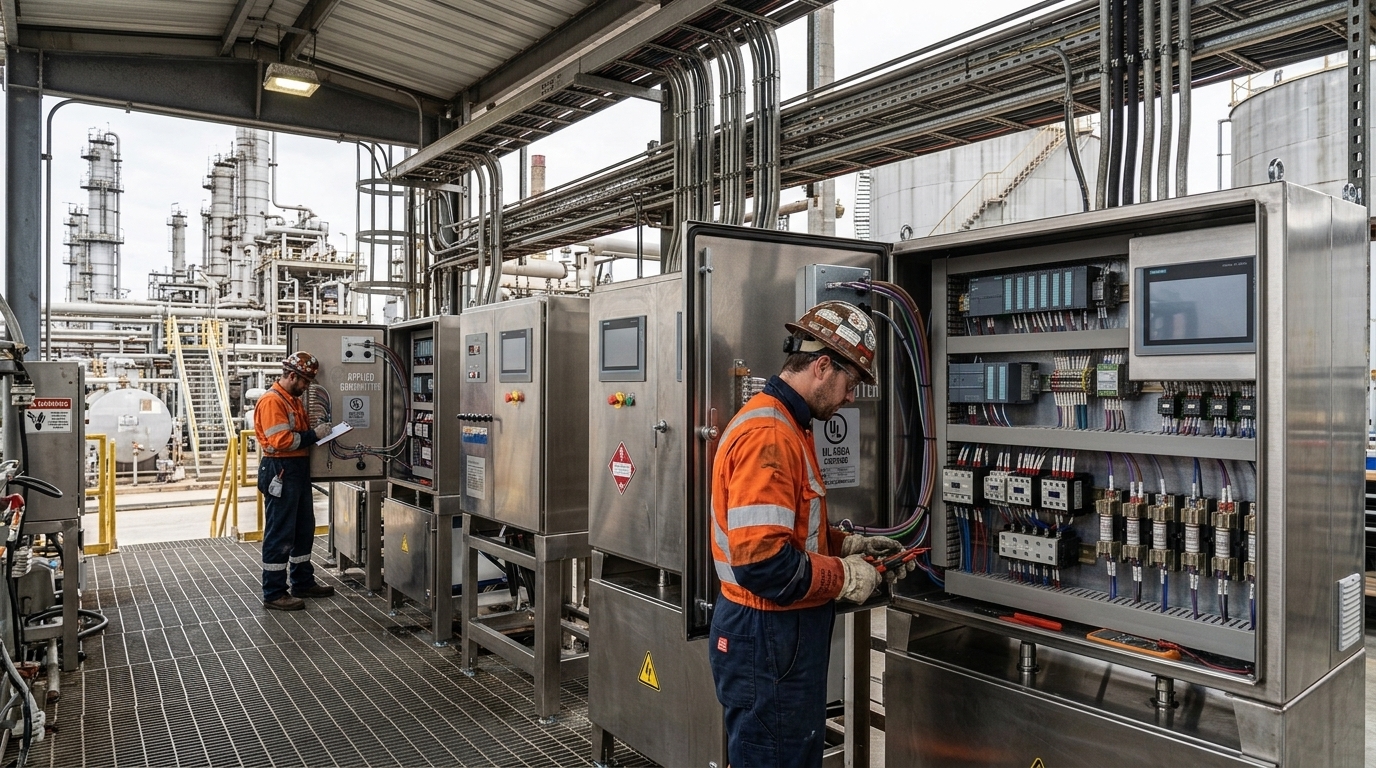
Custom Industrial Control Panels Manufactured By AppliedGrayMatter.com UL 508A Fabrication Shop in California (315) 878-2372 For Oil and Gas Refineries
Before the state-by-state discussion, here is the capability set that separates a dependable UL
508A panel shop from one that creates project risk:
California is the largest manufacturing state in the U.S. (Thomasnet). Its manufacturing sector contributed $411.8 billion to the state’s economy in 2024—about 9.9% of total economic output (Thomasnet). The sector employs roughly 1.2 million workers across more than 36,000 firms (Thomasnet). Electronics manufacturing accounts for the largest share of that employment at 17%, followed by food products at 13% and industrial machinery at 12%, with renewable energy, aerospace, and transportation also prominent (Thomasnet).
For California manufacturers and machine builders, the practical advantage of working with an in-state control panel manufacturer is straightforward: shorter logistics loops and faster response when a production line needs a replacement or expansion panel quickly. If your team is searching for a control panel manufacturer in California, evaluate shops on prototype-to-production range, documentation quality, and whether their delivery commitments survive contact with your actual project schedule. Applied Gray Matter fabricates panels for machine builders and manufacturers from our Anaheim facility in the middle of that base—so those are the questions we can help you work through.
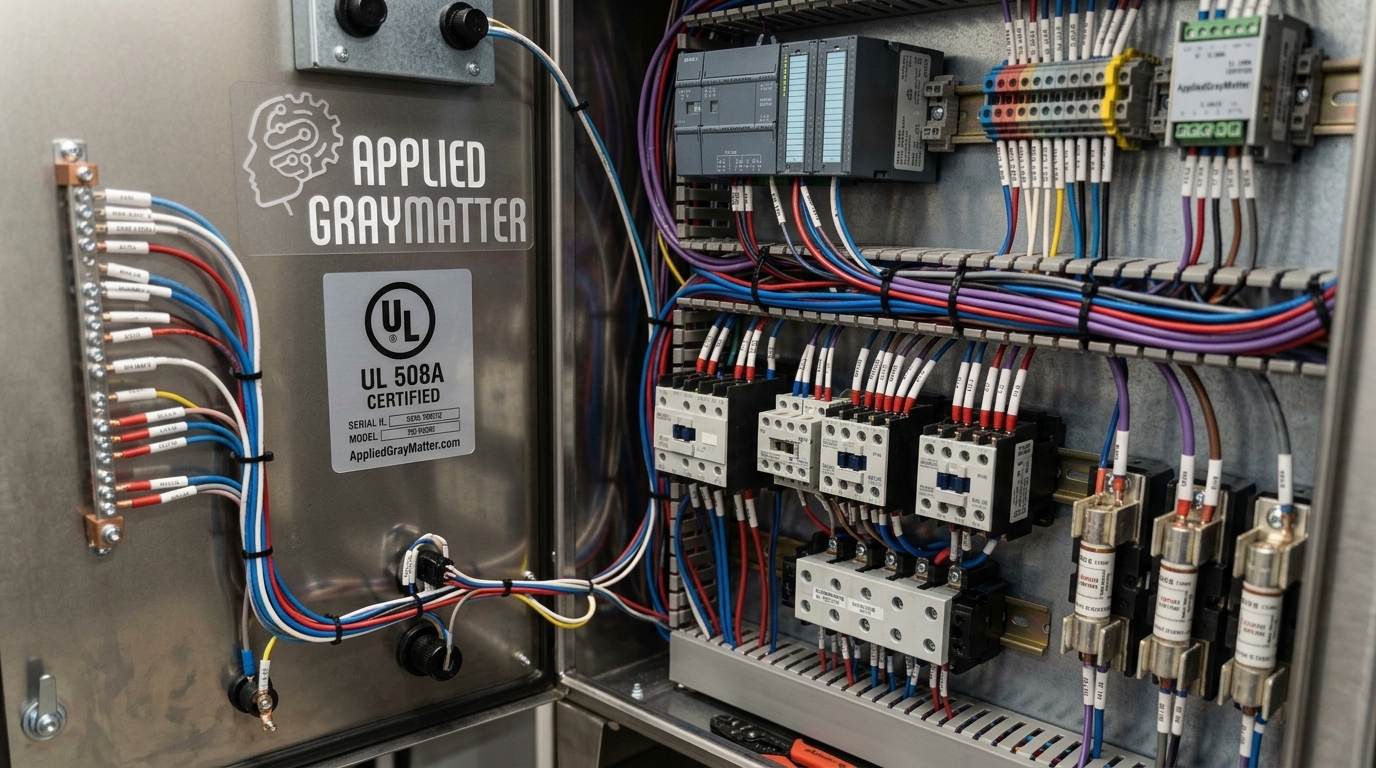
Custom Industrial Control Panels Manufactured By AppliedGrayMatter.com (315) 878-2372
Oregon’s manufacturing sector spans 6,995 establishments employing about 178,900 people—9% of state payroll employment, a higher share than the national 8% (Oregon Employment Department). The state’s employment profile is distinctive: computer and electronic components manufacturing accounts for 19% of Oregon manufacturing employment, versus about 8% nationally (Oregon Employment Department). Wood product manufacturing accounts for 12% in Oregon, versus 3% nationally (Oregon Employment Department). The state’s metals and machinery cluster adds more than 23,000 jobs and $2.3 billion in exports (Business Oregon).
Oregon machine builders searching for a control panel manufacturer should weigh how a shop handles electronics-heavy panel designs—clean, well-documented wiring matters more when your equipment integrates precision instrumentation. If your project involves food processing or millwork environments, ask whether the shop can support washdown and dust-laden environments with appropriately rated enclosures. The evaluation questions that matter most are process questions: drawing-revision control, labeling consistency, and whether the shop’s UL 508A program is current.
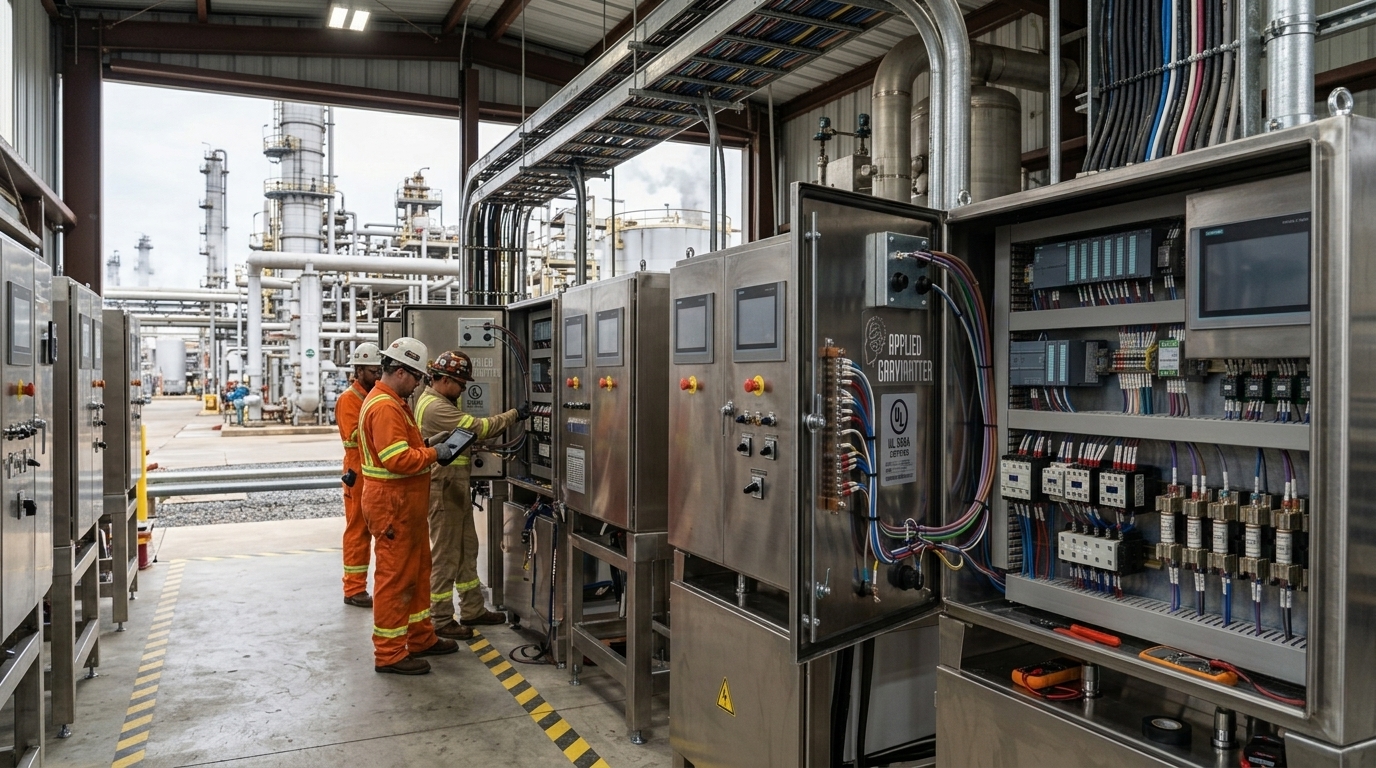
Custom Industrial Control Panels Manufactured By AppliedGrayMatter.com UL 508A Fabrication Shop in California (315) 878-2372 For Oil and Gas Refineries
Washington’s aerospace industry is valued at roughly $71 billion and includes more than 1,500 suppliers (Choose Washington). The state has produced more than 33,000 commercial and military aircraft over the last century (Choose Washington). It remains the sole producer of the 737, 767, and 777, and builds defense platforms including the P-8 Poseidon (Choose Washington).
For Washington machine builders and automation integrators, projects connected to aerospace work carry expectations that should shape panel sourcing: traceability, revision control, and documentation that stands up to customer and regulatory audits. When evaluating a control panel manufacturer from Washington, ask specifically how they manage engineering change orders mid-build, how they document wire labeling and as-built drawings, and whether their quality process is consistent enough that panels destined for different sites arrive interchangeable. Those questions apply regardless of where the shop is located—traceability and consistency travel with the panel, not the shop’s zip code.
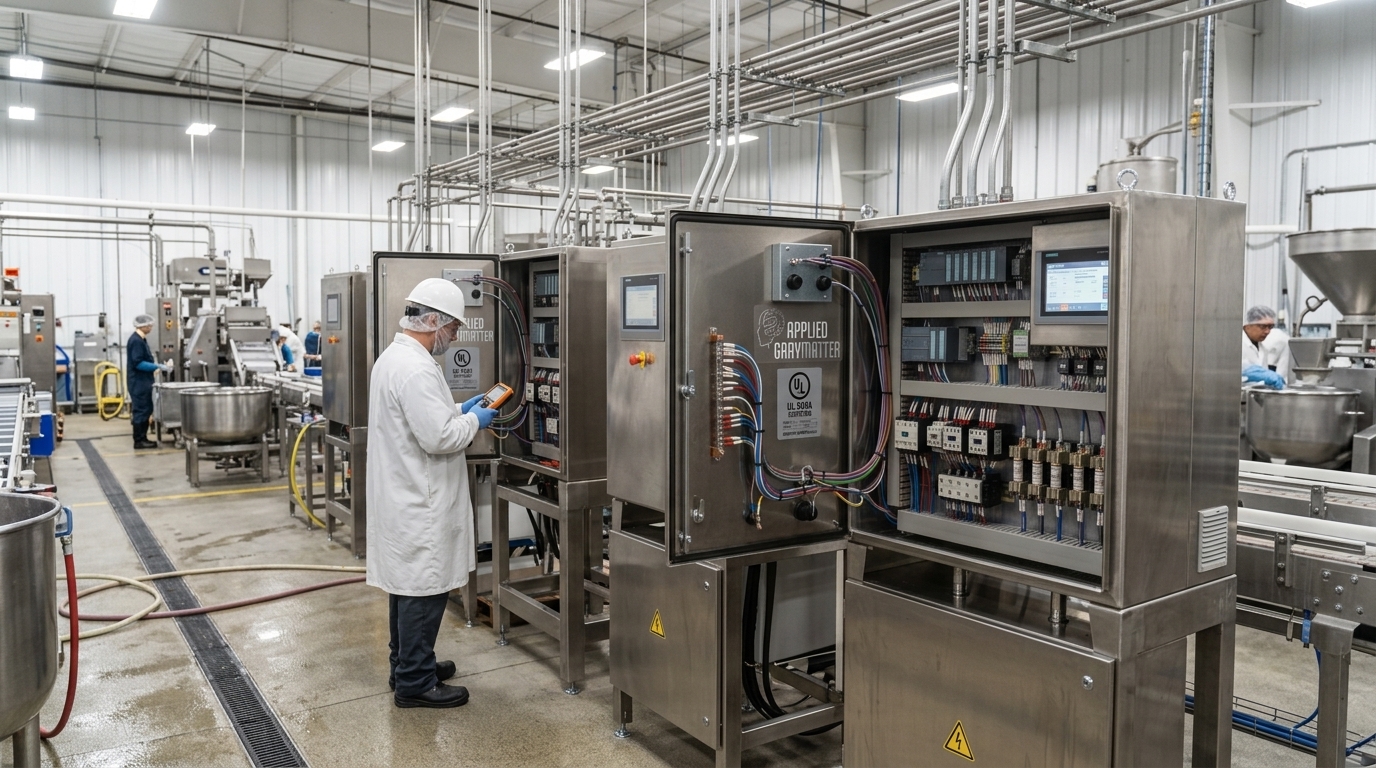
Custom Industrial Control Panels Manufactured By AppliedGrayMatter.com UL 508A Fabrication Shop in California (315) 878-2372 For Food and Industrial Beverage Manufacturing Facilities
Idaho manufacturing employs roughly 70,000 people, making it the state’s third-largest industry (Idaho Commerce). Its manufacturing base spans food and food-processing equipment, computer and electronic products, transportation equipment, medical devices, and industrial machinery (Idaho Commerce).
For any Idaho OEM whose program is moving from prototypes into repeatable production, the
question to ask a prospective control panel manufacturer is not just “can you build this panel “but “can you build this panel forty times, identically, on a schedule.” If that describes your situation, look for shops that support small-batch and scalable production runs with consistent documentation—those are the ones that keep pace with a growing OEM.
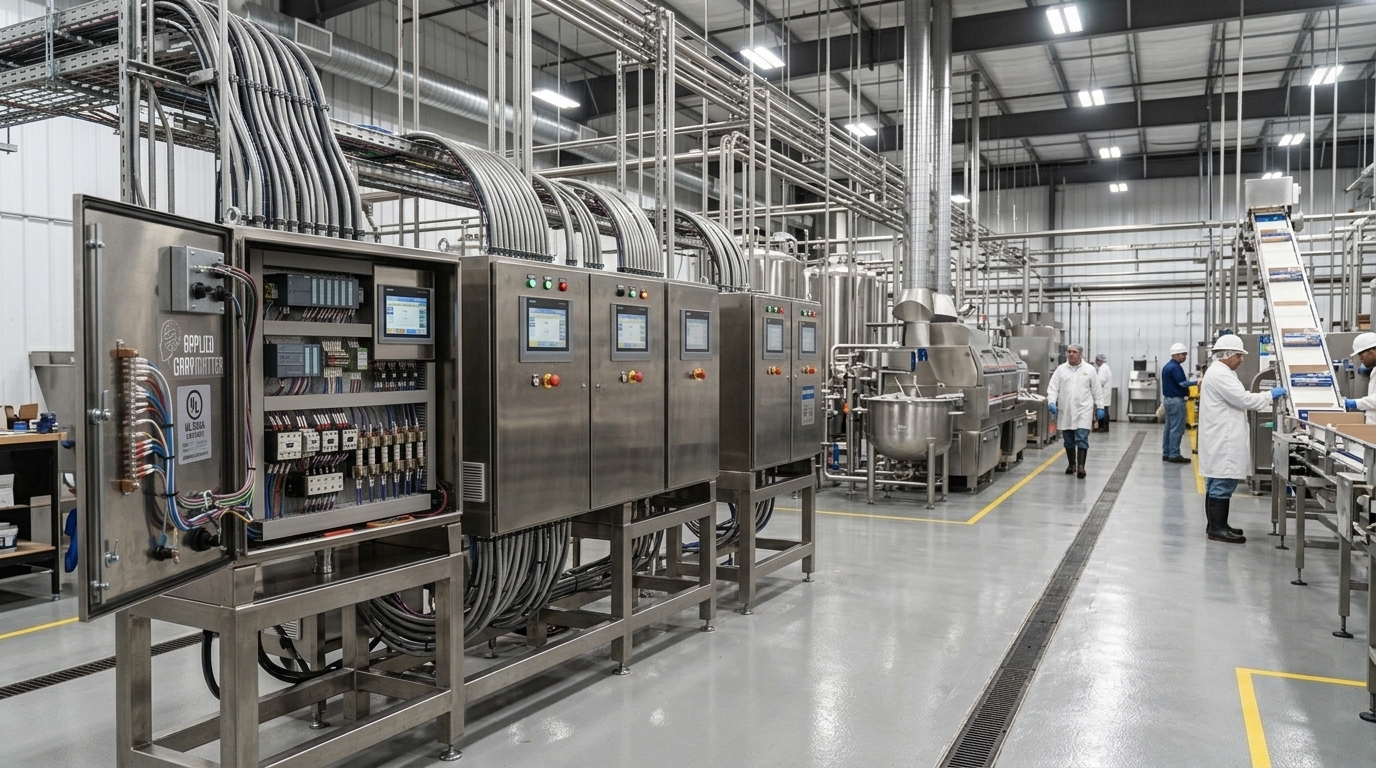
Custom Industrial Control Panels Manufactured By AppliedGrayMatter.com UL 508A Fabrication Shop in California (315) 878-2372 For Food and Industrial Beverage Manufacturing Facilities
Colorado’s aerospace companies perform R&D, design, and manufacturing across guided missiles, space vehicles, satellites, navigation and detection instruments, planetary spacecraft, and launch systems (Colorado OEDIT). The state’s aerospace ecosystem includes four military commands and research institutions including the University of Colorado and the School of Mines (Colorado OEDIT).
Colorado manufacturers evaluating a control panel manufacturer should focus on the disciplines that space and defense work rewards: tight revision control, complete as-built documentation, and a shop that treats a drawing change as a formal process rather than a phone call. If your engineering team has limited capacity, a panel shop that can take a schematic and run with it—flagging only genuine constructability issues—reduces the load on your engineers. Ask how a shop handles one-off prototype builds for specialized machines; that is where workmanship and judgment show up before you commit to a production run.
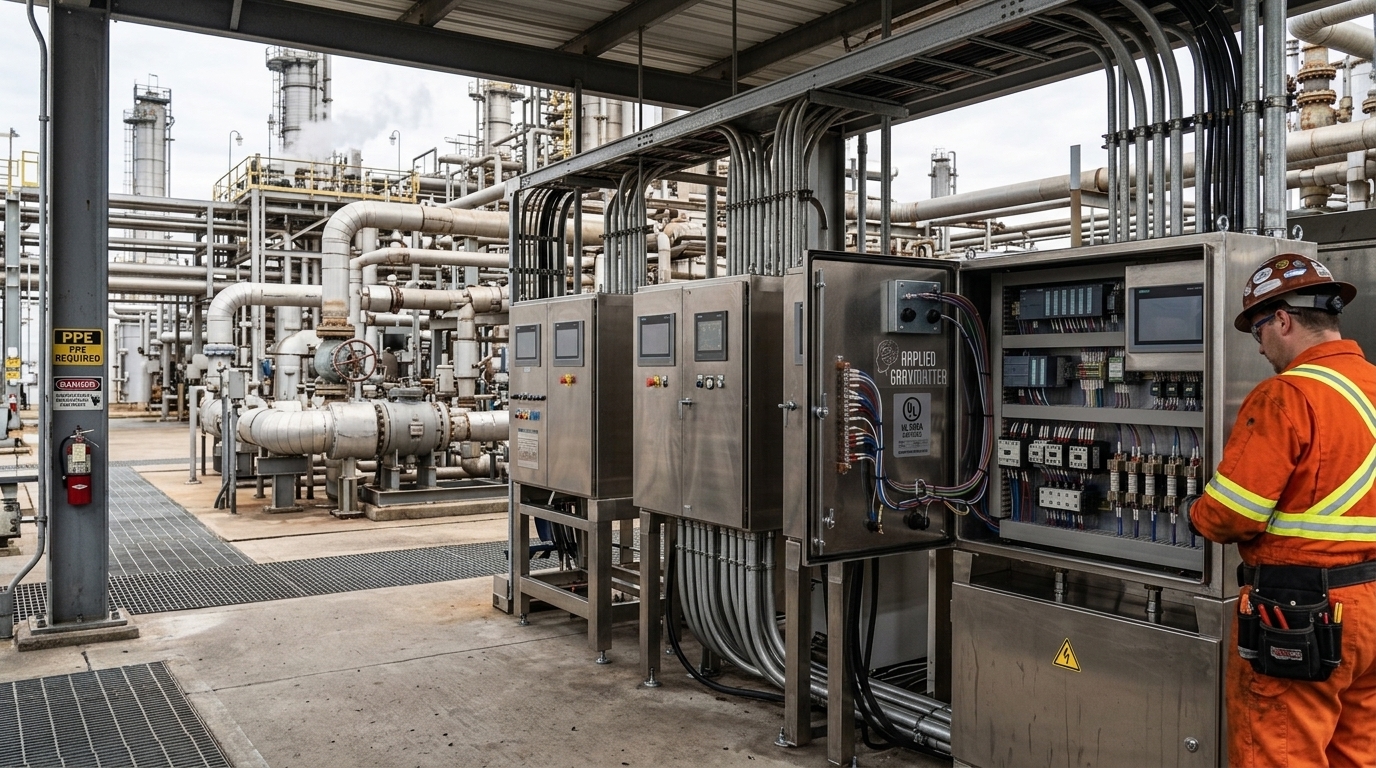
Custom Industrial Control Panels Manufactured By AppliedGrayMatter.com UL 508A Fabrication Shop in California (315) 878-2372 For Oil and Gas Refineries
Arizona has been a center of semiconductor design, development, and production for more than 70 years (Arizona Commerce Authority). Since 2020, the state has attracted more than 60 semiconductor-industry expansions representing 25,000-plus projected jobs and over $205 billion in announced investment—more than any other state, according to the state’s commerce authority (Arizona Commerce Authority).
Semiconductor and microelectronics facilities run on precise, high-uptime equipment, and the toolsets and facility infrastructure around them demand control panels built to exacting specifications. For Arizona manufacturers and equipment suppliers searching for a control panel manufacturer, the evaluation criteria that matter most are documentation completeness —because commissioning teams live and die by as-built drawings—and a shop’s ability to hold quality across repeated builds of the same design. A fabrication partner with a disciplined UL 508A program and clear scheduling communication reduces the risk that a panel becomes the long-lead item on your equipment list.
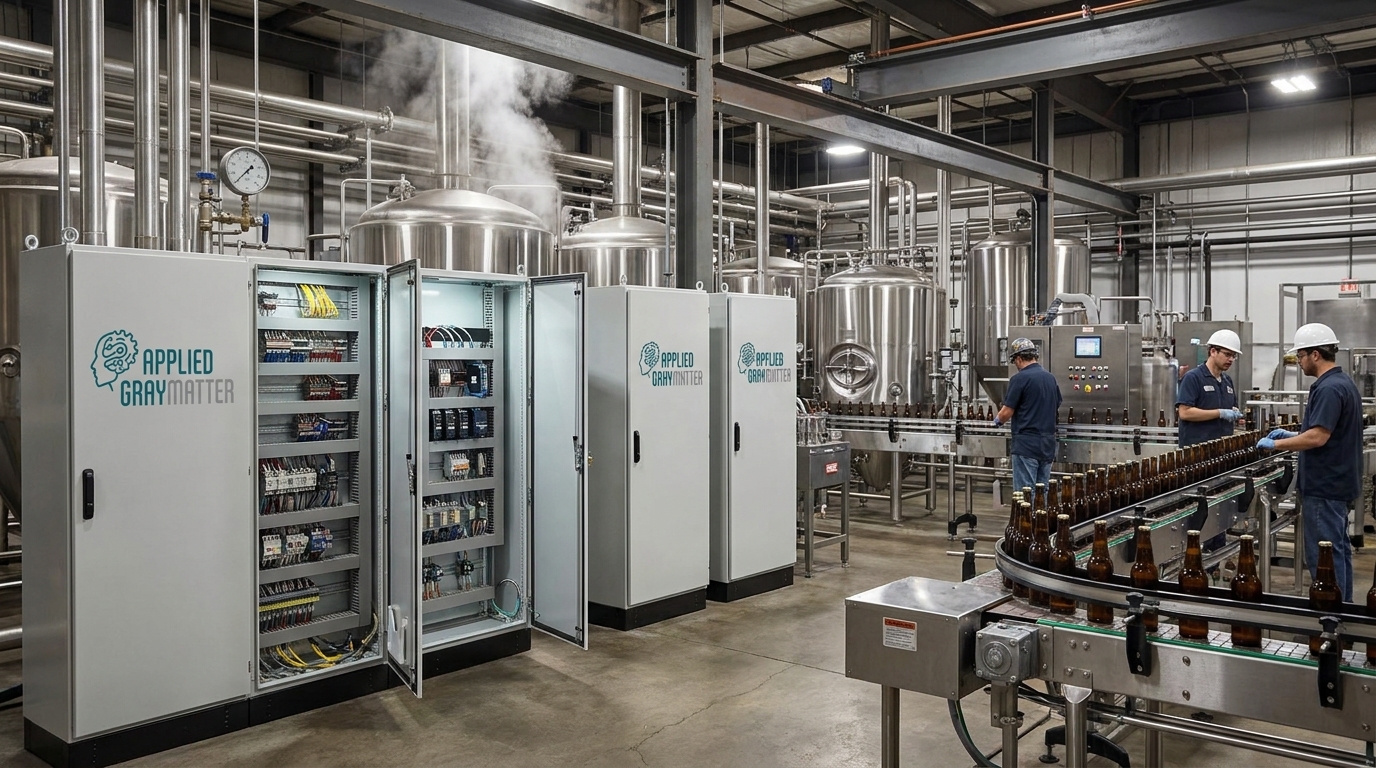
https://appliedgraymatter.com/services/ul-508a-control-panel-fabrication-shop/
Nevada’s manufacturing sector is small relative to its neighbors but growing fast. State workforce projections show manufacturing employment of 52,585 jobs in 2026, up nearly 79% from 29,398 in 2016 (Nevada GOED). Battery manufacturing accounts for about 14,500 of those projected jobs (Nevada GOED). The state’s economy also spans logistics operations, mining, and entertainment-industry infrastructure (Nevada DETR).
For Nevada machine builders and production teams, the panel-sourcing question often comes down to capacity reliability. When a local sector expands quickly, supplier capacity can tighten, and the panel shop that returns calls, holds dates, and communicates schedule risk proactively is worth more than one that is merely closer on a map. If you are evaluating a control panel manufacturer for a Nevada project, ask about their current backlog, their track record with committed deadlines, and their process for flagging material or labor constraints before they become your problem.
Utah manufacturing provides more than 150,000 jobs and pays over $10 billion in wages annually (Utah Department of Workforce Services). Advanced manufacturing—spanning aerospace products, computer and electronics, and medical equipment—accounts for roughly half of manufacturing employment in the state (Utah Department of Workforce Services).
If your Utah operation is moving quickly between a one-off prototype for a new machine design and a repeat order of fifty panels, flexibility is the key panel-sourcing criterion. The question for a Utah team evaluating a control panel manufacturer is whether the shop can handle both without a quality dip. Ask how they sequence work between prototypes and production, who owns your project inside the shop, and what their communication cadence looks like when a deadline is at risk.

New Mexico’s advanced manufacturing ecosystem spans semiconductors and electronics— anchored by Intel’s Rio Rancho campus, identified as the state’s largest private manufacturing employer—along with solar and clean energy, aerospace and space systems, automotive and EV components, medical devices, and value-added food processing (New Mexico Partnership).
If your project site is far from your panel supplier, documentation and remote support capabilities can matter more than physical proximity. Ask how a shop delivers as-built drawings, wiring diagrams, and labeling records; whether they can support commissioning remotely if travel is impractical; and how they package and protect panels for long-haul shipment.
Texas manufacturing output accounted for more than 9% of total U.S. manufacturing GDP in 2021 state data (Office of the Texas Governor). The state has led the nation in exports for over two decades, with $487 billion in exports in 2022 (Office of the Texas Governor). Its manufacturing workforce exceeds 925,000 across more than 28,000 establishments (Office of the Texas Governor). The industrial mix is led by chemicals, petroleum and coal products, computer and electronics, and transportation equipment including aerospace (Office of the Texas Governor).
Texas’s scale changes the sourcing conversation: with a supplier base this deep, the risk is not finding a control panel manufacturer—it is qualifying the right one. For Texas OEMs and machine builders, the differentiators worth testing are consistency at production volume and documentation that survives audits from demanding end customers in energy, chemicals, and semiconductors. Ask a prospective shop for evidence of repeat-build consistency: sample drawings, labeling standards, and how they handle a 100-panel order differently from a 10-panel order. A shop that answers that question well is engineered for scale.
Oklahoma’s aerospace and defense industry generates $52.5 billion in annual statewide economic activity and supports more than 250,000 jobs, making it the state’s second-largest and fastest-growing industry sector (Oklahoma Aerospace).
If your project supports aircraft maintenance, repair, or overhaul, those operations run on test equipment, ground support systems, and facility infrastructure that all depend on reliable control panels. For Oklahoma teams evaluating a control panel manufacturer, the questions that matter are turnaround discipline—because downtime in MRO is measured in lost aircraft availability—and whether the shop can support both new-build panels and replacement panels for legacy equipment. If your project involves a replacement panel that must match an older design, ask how they source documentation and how quickly they can mobilize on urgent orders.
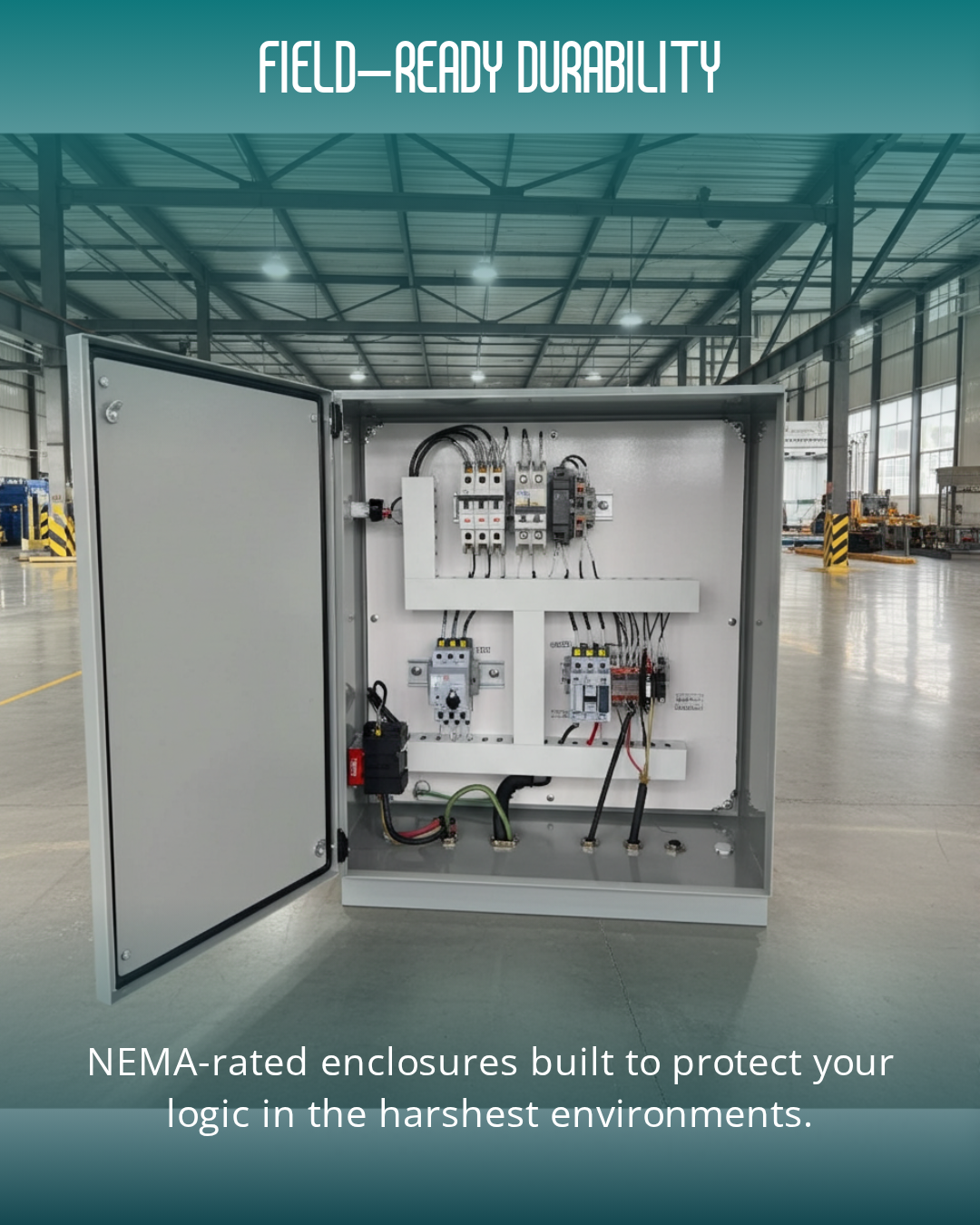
Illinois ranks high among the states in the manufacture of food products, chemicals, fabricated metals, computer and electronic products, and rubber products (Britannica). It is also among the top producers of nonelectrical machinery, which accounts for the largest share of the state’s foreign exports (Britannica).
That machinery-building heritage matters for panel sourcing: Illinois machine builders and OEM engineering firms expect complete documentation, revision control, wiring consistency, and on-time delivery—capabilities that define the standard a control panel manufacturer has to meet to compete for their work. If your Illinois team is qualifying panel shops, treat the RFQ process itself as the test: how structured is their quotation, how quickly do they surface constructability questions, and how do they handle the documentation package your customers demand?
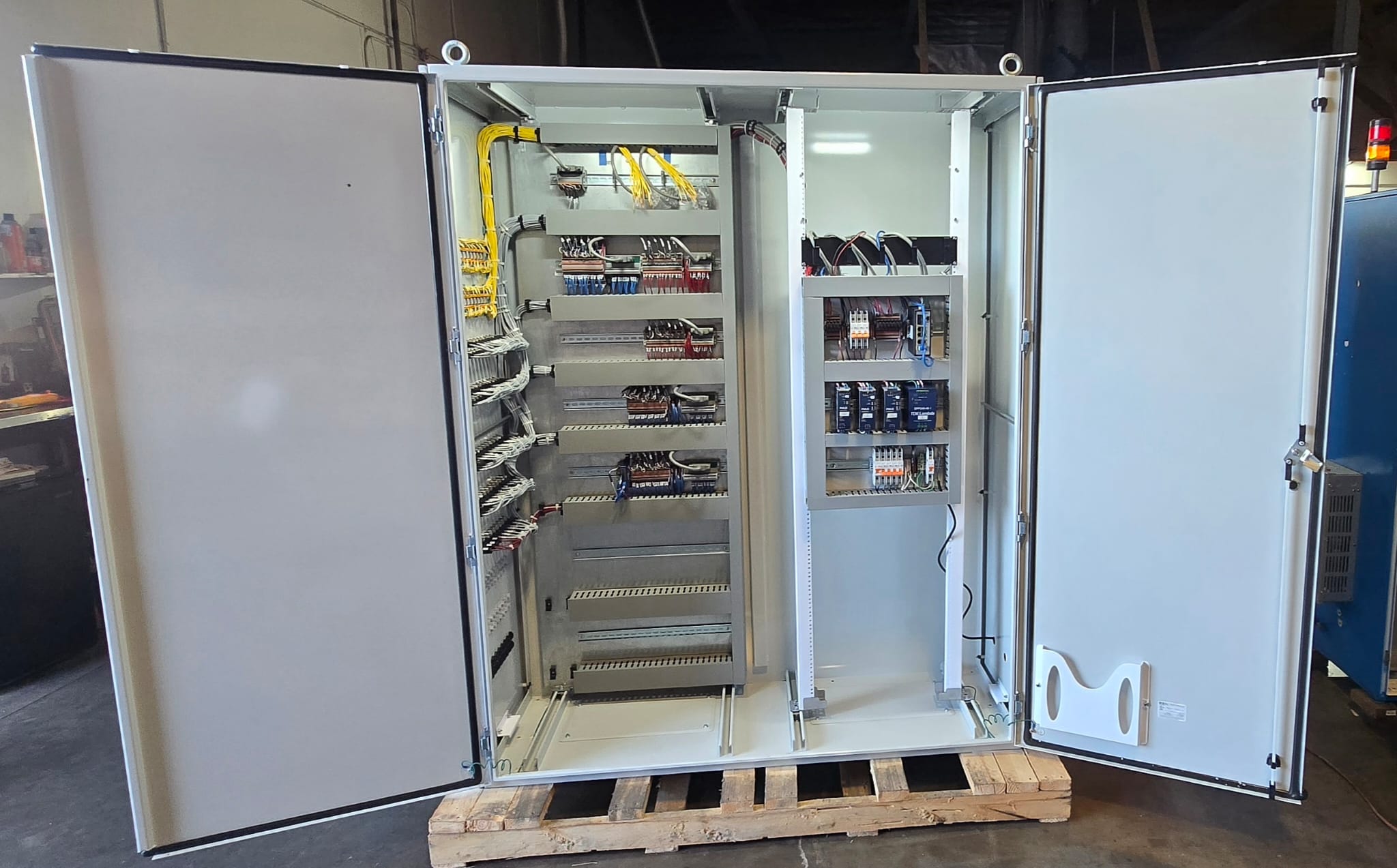
Florida’s nominal manufacturing GDP was $86.6 billion in Q3 2025, and the sector employs more than 434,000 workers (Florida TaxWatch). The state ranks sixth among states in the total value of manufactured goods exported (Florida TaxWatch). Its aviation and aerospace cluster spans aircraft manufacturing, maintenance and refurbishment, pilot training, space-related activity, and unmanned systems (SelectFlorida).
For Florida manufacturers evaluating a control panel manufacturer, environment and schedule are worth discussing upfront if they apply to your project. If your equipment will operate in Florida’s humidity and coastal salt air, enclosure ratings and environmental suitability should be a first-order conversation, not an afterthought. And if your program is tied to launchadjacent or defense calendars, a shop’s record on committed delivery dates becomes a primary qualification criterion. Ask both questions before comparing price.
Manufacturing accounted for 67% of new jobs announced by the Georgia Department of Economic Development in fiscal year 2026—more than 17,000 announced manufacturing jobs (Georgia Department of Economic Development). The state’s key manufacturing sectors include advanced manufacturing, electric mobility, aerospace, advanced materials, and automation (Georgia Department of Economic Development). Manufacturers operating in the state include Hyundai’s Metaplant, Kia, Gulfstream Aerospace, and Mitsubishi (Georgia Department of Economic Development).
If your Georgia operation is standing up a new production program, control-panel sourcing lands early in the equipment timeline. The question to put to a prospective control panel manufacturer is how they support ramp phases: prototype panels for line validation, small batches for pilot production, then volume. A shop that can carry one design through all three phases without handoffs or quality drift saves your program the cost of requalification.
Tennessee’s automotive sector employs more than 144,700 people across 900-plus automotive companies (TNECD). Automotive companies have a presence in 88 of the state’s 95 counties (TNECD).
Automotive manufacturing imposes a specific discipline on panel sourcing: line downtime is measured in vehicles, and every panel that controls a production process has to be right the first time. For Tennessee machine builders and plant engineering teams evaluating a control panel manufacturer, the qualifying questions should cover repeat-build consistency—because replacement and expansion panels must match installed equipment—documentation that lets your maintenance team troubleshoot without calling the OEM, and delivery reliability measured against your production calendar rather than the shop’s convenience.
North Carolina has the largest manufacturing workforce in the Southeast—roughly 479,000 manufacturing workers (EDPNC). Manufacturing employment grew 18% from 2015 to 2025 (EDPNC). The state hosts 11,600 manufacturers and 23,000 wholesale suppliers (EDPNC). Key sectors include machinery and equipment, automotive and batteries, aerospace including MRO, life sciences, and food and beverage (EDPNC).
If your North Carolina project involves life-sciences facilities, ask whether the shop’s documentation supports validation and audit processes. For North Carolina teams searching for a control panel manufacturer, ask how a shop’s documentation package is organized—wire labels, as-built drawings, component records—and whether it can be delivered in a form your quality team can use directly. Documentation quality is where panel shops most often differentiate themselves, and where the cost of a weak choice surfaces months later.
South Carolina leads the nation in export sales of tires and passenger vehicles (SC Commerce). Its advanced manufacturing base spans automotive, aircraft, appliances, and boats (SC Commerce). The state’s aerospace manufacturing sector—a network of 400-plus aerospace and aviation companies—employs more than 136,000 workers (South Carolina Aerospace). Manufacturing employs 13.9% of South Carolina’s private-sector workforce (SC Commerce).
Export-oriented manufacturing raises the stakes on panel consistency: equipment shipped to overseas customers has to operate correctly without the builder on site, which makes panel documentation and workmanship part of the product as much as the machine itself. For South Carolina OEMs evaluating a control panel manufacturer, the key questions concern what travels with the panel—drawings, labeling, test documentation—and whether the shop’s quality system produces identical panels for multi-unit orders.
New York’s manufacturing regions remain among the state’s largest employment sectors (NY Comptroller). The state produces industrial machinery and systems including turbines, pumps, compressors, and generators (Empire State Development). It is also building a major semiconductor ecosystem, with more than $124 billion in announced semiconductor investment across the state since 2022 (Empire State Development).
That combination—heavy industrial machinery plus high-technology microelectronics—means New York sourcing teams may need a control panel manufacturer that can serve two very different sets of requirements: robust power and motor control panels for rotating equipment, and high-precision, well-documented panels for semiconductor facility infrastructure. If your program spans both, ask a prospective shop to walk through an example of each; their comfort level across that range tells you whether they are a generalist fabricator or a disciplined one.
693,500 workers across more than 13,000 firms (Thomasnet). Key sectors include food and
beverage, chemicals, pharmaceuticals and medical devices, fabricated metals, and heavy
machinery (Thomasnet).
If your project is a retrofit and the original drawings are incomplete or lost, ask whether a
prospective control panel manufacturer can work from photographs, existing panels, and
functional requirements to produce a documented, code-appropriate replacement. That
capability is worth qualifying up front if it matches your situation.
New Jersey manufacturing employed over 253,000 people across roughly 9,800 establishments in 2024, spanning processes from food and printing to petroleum and pharmaceuticals (New Jersey Department of Labor). The state ranks No. 1 nationally in pharmaceutical manufacturing employment, with more than 40,000 workers in pharmaceutical manufacturing—roughly three times the national-average concentration (NJ BIZ). Its broader life-sciences workforce exceeds 127,000 employees (NJ BIZ).
Life-sciences and chemical manufacturing environments can impose particular demands on control panels: washdown exposure, hazardous-location requirements, and validation-grade documentation. If your New Jersey project involves any of those conditions, put them on the table early. The qualifying questions for a control panel manufacturer should include how the shop handles enclosure ratings for wet and corrosive environments, whether they have experience with the documentation depth that validated processes require, and how they manage component substitution when a specified part goes on allocation.
Maryland’s manufacturing sector combines aerospace and aviation, life sciences, cleantech, and advanced Industry 4.0 technologies (Maryland Commerce). The state’s aerospace and aviation sector is supported by Maryland’s military presence and uncrewed aviation activity (Maryland Commerce). Maryland’s logistics position is also a genuine advantage: its port and rail infrastructure make it the closest Atlantic seaport to the Midwest, with one-third of the U.S. population within an overnight drive (Maryland Commerce).
For Maryland machine builders and system integrators, defense-adjacent work can raise documentation and traceability expectations, while the biotech corridor can raise validation and cleanliness requirements. A control panel manufacturer serving Maryland projects should be able to speak to both. If your project has either profile, ask how they manage documentation packages for audited programs, how they handle enclosure and component selection for controlled environments, and how they coordinate delivery to facilities with security or scheduling constraints.
Whatever state your project is in, these questions will separate dependable UL 508A fabricators
from the rest:
Manufacturing teams already manage changing schedules, supply-chain challenges, and demanding installation timelines. Your panel shop should help reduce that pressure—not add to it.
Applied Gray Matter helps turn your designs into finished, production-ready control panels from our Anaheim, California facility. Whether you need one panel or one hundred, our focus remains the same: build to specification, maintain consistent workmanship, and meet your project’s compliance and delivery requirements.
For your next machine build, automation project, or production run, we can discuss your project’s location, specifications, panel quantities, and delivery requirements. Visit Applied Gray Matter or call Rock at (315) 878-2372.
Experienced UL 508A Control Panel Fabrication, Ready When Your Plant Can’t Wait When a control panel fails, an automated line...
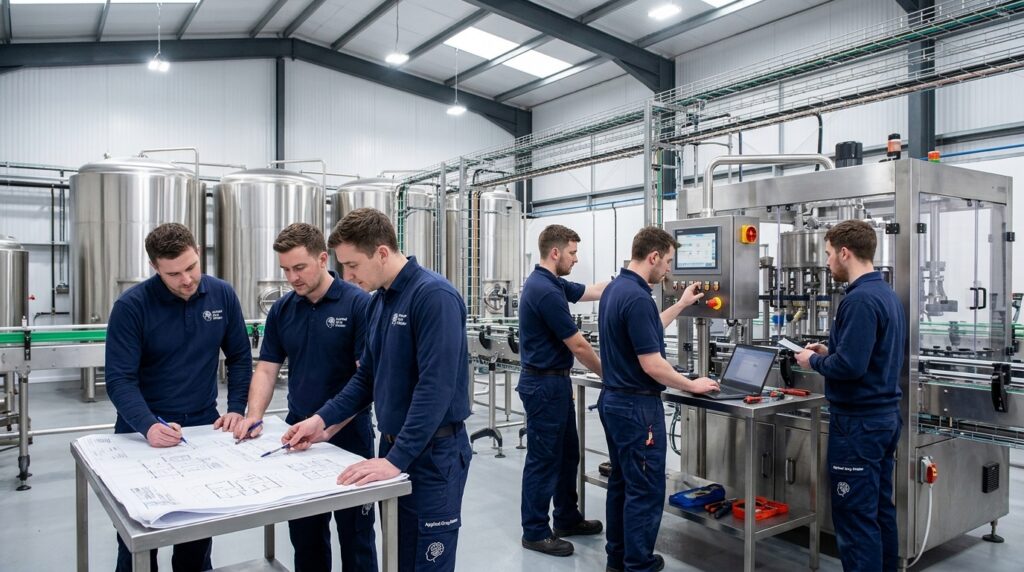
Field-Engineering Playbook · Reliability & Commissioning Industrial Machine Downtime Is a Solvable Engineering Problem — Here’s the Playbook We Use...
Our team at Applied Gray Matter is ready to collaborate with you to create optimal custom controls for any OEM application. Call Us (315) 878-2372 or click ‘Schedule a Consultation’ to get started.